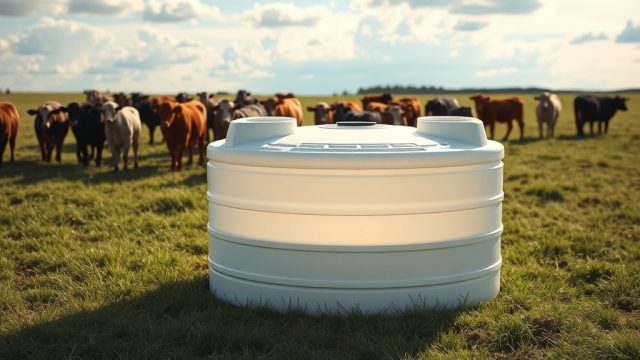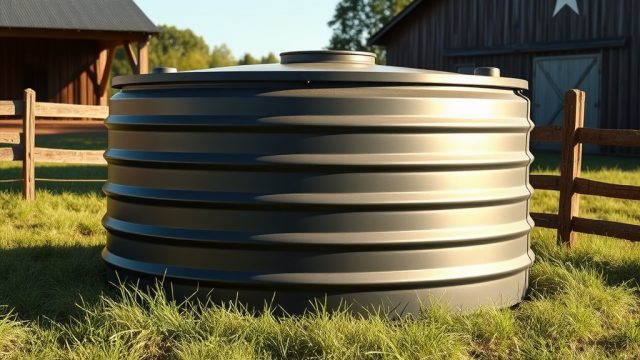
Understanding the Construction of the Tuff Stuff 200-Gallon Stock Tank
The Tuff Stuff 200-Gallon Stock Tank has become a staple for livestock operations across the UK and Ireland, offering a robust water solution for cattle, sheep, and horses. However, not all stock tanks are created equal, and the manufacturing method plays a critical role in durability, weight, and long-term performance. This guide examines the two primary production techniques—rotomolding and injection molding—to help farmers and smallholders make an informed purchase.
When selecting a stock tank, material composition directly impacts resistance to cracking, UV degradation, and impact from animal pressure. The Tuff Stuff 200-gallon tank is available in both rotomolded and injection-molded versions, each suited to different operational conditions.
What Is Rotomolded Polyethylene, and How Does It Affect the Tank?
Rotational molding, known as rotomolding, involves heating polyethylene resin in a mold that rotates on two axes. The molten plastic coats the interior surface evenly, producing a seamless, one-piece structure. For the Tuff Stuff 200-gallon stock tank, this results in thick, uniform walls—typically 5-8 mm—with no weld lines or weak joints.
The process allows for integrated features such as reinforced rim flanges and molded-in fittings. Rotomolded tanks are inherently stress-free because the cooling is gradual, reducing the risk of warping. Farmers in colder regions prefer rotomolded units for their superior impact resistance when ice forms. However, the cycle time per tank is longer, which slightly increases the retail price. Expect to pay between £180 and £250 for a rotomolded Tuff Stuff 200-gallon tank, depending on the retailer and included accessories.
What Is Injection Molding, and How Does It Differ for a 200-Gallon Tank?
Injection molding forces molten polyethylene into a closed metal mold under high pressure. This method produces parts with precise dimensional accuracy and smooth surfaces. For the Tuff Stuff 200-gallon stock tank, injection-molded versions are typically assembled from two or more sections that are welded or bolted together, as the process struggles to produce single pieces over 150 gallons without excessively high clamping forces.
The walls of injection-molded tanks are thinner—usually 3-5 mm—which reduces material cost. You’ll find these tanks priced between £120 and £170. However, the multi-piece construction introduces seams that can become weak points under thermal stress or physical abuse. Injection-molded tanks are lighter, making them easier to transport, but they may not withstand heavy livestock pushing against the sides as effectively as rotomolded units.
Rotomolded vs. Injection Molded: A Direct Comparison
| Feature | Rotomolded Tuff Stuff 200-Gallon | Injection Molded Tuff Stuff 200-Gallon |
|---|---|---|
| Wall thickness | 5–8 mm (uniform) | 3–5 mm (variable at seams) |
| Construction | Seamless, one-piece | Multi-section welded or bolted |
| Impact resistance | Excellent (handles ice and kicks) | Moderate (seams may crack) |
| UV stability | High (UV-stabilized throughout) | Moderate (additives in surface layer) |
| Weight (empty) | Approx. 45–55 kg | Approx. 30–40 kg |
| Typical price (GBP) | £180–£250 | £120–£170 |
| Repair complexity | Low (can patch or weld polyethylene) | Higher (seams require specialized repair) |
| Best use case | Year-round outdoor, heavy livestock | Seasonal or protected locations |
How Does Material Choice Affect Freeze Protection and Algae Control?
The manufacturing method directly influences how the tank handles temperature extremes. Rotomolded tanks, with their thicker walls and monolithic structure, provide better insulation against freezing. They retain heat longer during cold nights, which reduces the workload on electric or solar heaters. For farms relying on solar-powered heating, the rotomolded version is a superior partner because it minimizes heat loss.
Algae control also differs. Injection-molded tanks often have smoother interior surfaces due to the high-pressure process, which can make algae attachment slightly more difficult initially. However, thin walls allow more light penetration, promoting photosynthesis and algae blooms. Rotomolded tanks, while slightly rougher inside, block more light due to thicker walls. Pairing either tank with natural algae control methods like barley straw or shading works well, but the rotomolded version requires less frequent treatment.
What Do Owners Say About Long-Term Durability?
Farmers who have used the rotomolded Tuff Stuff 200-gallon stock tank for three or more years consistently report satisfaction with its crack resistance, even in harsh Cumbrian winters. One Cumbrian sheep farmer mentioned his tank survived a 4-foot fall from a trailer without cracking. On the other hand, injection-molded users note that when the tank is overfilled and water freezes, seams can separate after two seasons.
For those concerned about biological balance, rotomolded tanks hold up better to frequent cleaning without developing microscopic cracks where bacteria can hide. Integrating a bacteria treatment program is easier with rotomolded units because the interior can be scrubbed or pressure-washed without worrying about seam degradation. Most owners agree that the initial higher investment in rotomolded construction pays off within four to five years through reduced replacement costs.
How Should Installation and Drainage Practices Vary by Material?
Installation base considerations differ between the two types. Rotomolded tanks can be placed on a compacted gravel base without concern for stress points, as the uniform wall thickness distributes weight evenly. Injection-molded tanks benefit from a concrete pad to avoid flexing at the seams, especially when full of water (approximately 800 kg or 1,760 lbs).
For drainage, the siphon system works identically on both, but the thinner walls of injection-molded tanks require careful thread engagement when fitting the drain valve. Overtightening can cause cracking. Owners should follow the siphon drain maintenance tips to ensure long service life. Rotomolded tanks have more robust threaded inserts that withstand repeated wrench tightening.
Frequently Asked Questions
1. Which material type lasts longer for a Tuff Stuff 200-gallon stock tank?
Rotomolded tanks generally last 10–15 years, while injection-molded units average 5–8 years under similar outdoor conditions.
2. Can I use a UV-stabilizer spray on an injection-molded tank to extend its life?
Yes, but only if the spray is compatible with polyethylene. Apply a dedicated UV protectant annually to slow degradation of thin walls.
3. Is the rotomolded tank worth the extra £80–£100?
For permanent installations with heavy livestock, yes. The added impact resistance and longer lifespan offset the higher upfront cost within three to four years.
4. Do both materials handle hot water from solar heaters equally?
No. Rotomolded tanks can handle water temperatures up to 60°C without deforming, while injection-molded tanks may soften above 45°C. Check your solar heater’s output temperature.
5. Which tank is easier to repair if cracked?
Rotomolded tanks can be patched with a polyethylene welding kit. Injection-molded tanks often require replacing the damaged panel or the entire tank, as seams are difficult to seal permanently.
6. Can I use the Tuff Stuff 200-gallon tank for non-livestock purposes?
Absolutely. Both versions work well as rainwater collection cisterns or garden ponds, but rotomolded is preferred for underground installation due to superior compressive strength.