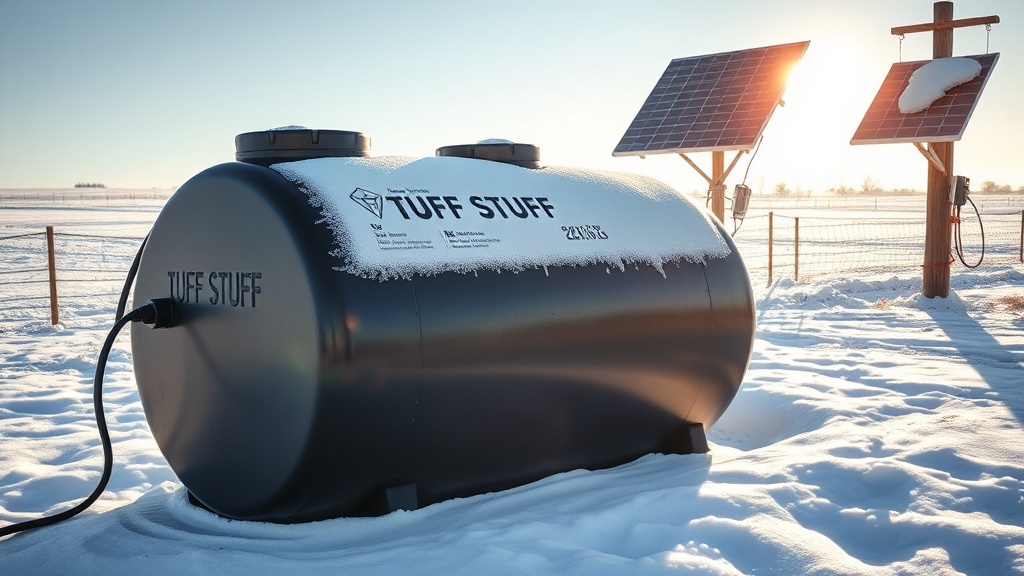
Introduction: Keeping Your Tuff Stuff 200-Gallon Stock Tank Ice-Free This Winter
Winter in North America brings bone-chilling temperatures that can turn a dependable 200-gallon stock tank into a solid block of ice within hours, endangering livestock hydration and tank integrity. The Tuff Stuff 200-gallon model, built from heavy-duty polyethylene, demands a reliable freeze protection strategy to maintain open water access through subzero conditions. Choosing between solar and electric heaters presents a critical decision for farm managers balancing energy costs, environmental footprint, and consistent performance. This article compares both heating methods specifically for the Tuff Stuff 200-gallon tank, providing practical guidance to keep water flowing all winter long.
What Are the Basic Differences Between Solar and Electric Heaters for the Tuff Stuff 200-Gallon Tank?
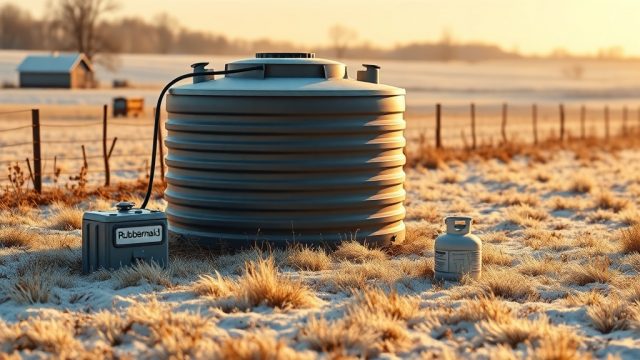
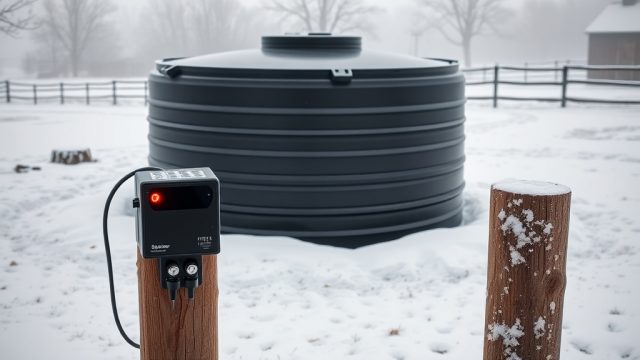
Electric heaters for stock tanks typically use immersion elements or thermostatically controlled base units that plug into standard 120-volt outlets. These devices can range from 250 watts to 1500 watts, generating steady heat to prevent ice formation. For the Tuff Stuff 200-gallon tank, which holds approximately 1,670 pounds of water when full, an electric heater rated for 1000 watts or more is recommended for effective freeze protection in temperatures down to -20°F.
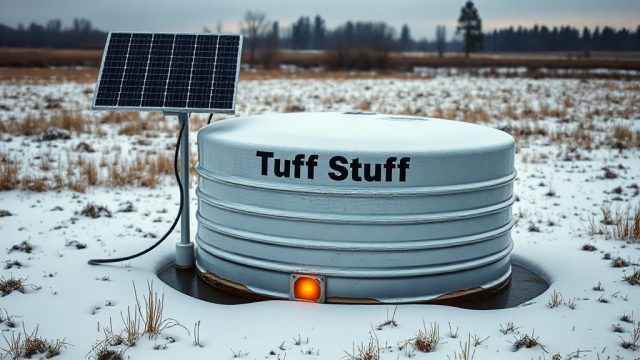
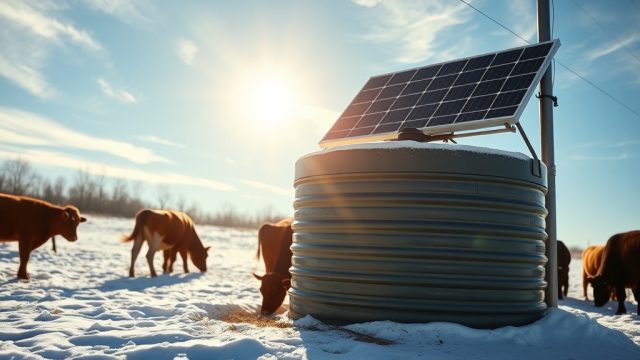
Solar heating systems for stock tanks employ photovoltaic panels to capture sunlight, converting it to direct current electricity that powers submersible heating elements or circulates warmed fluid through heat exchangers. A typical solar setup for a 200-gallon tank requires at least 300 watts of solar panel capacity and a charge controller with battery storage to maintain operation through cloudy days and nighttime hours. The initial investment for solar runs $600 to $1,200, whereas a quality electric heater costs $80 to $200.
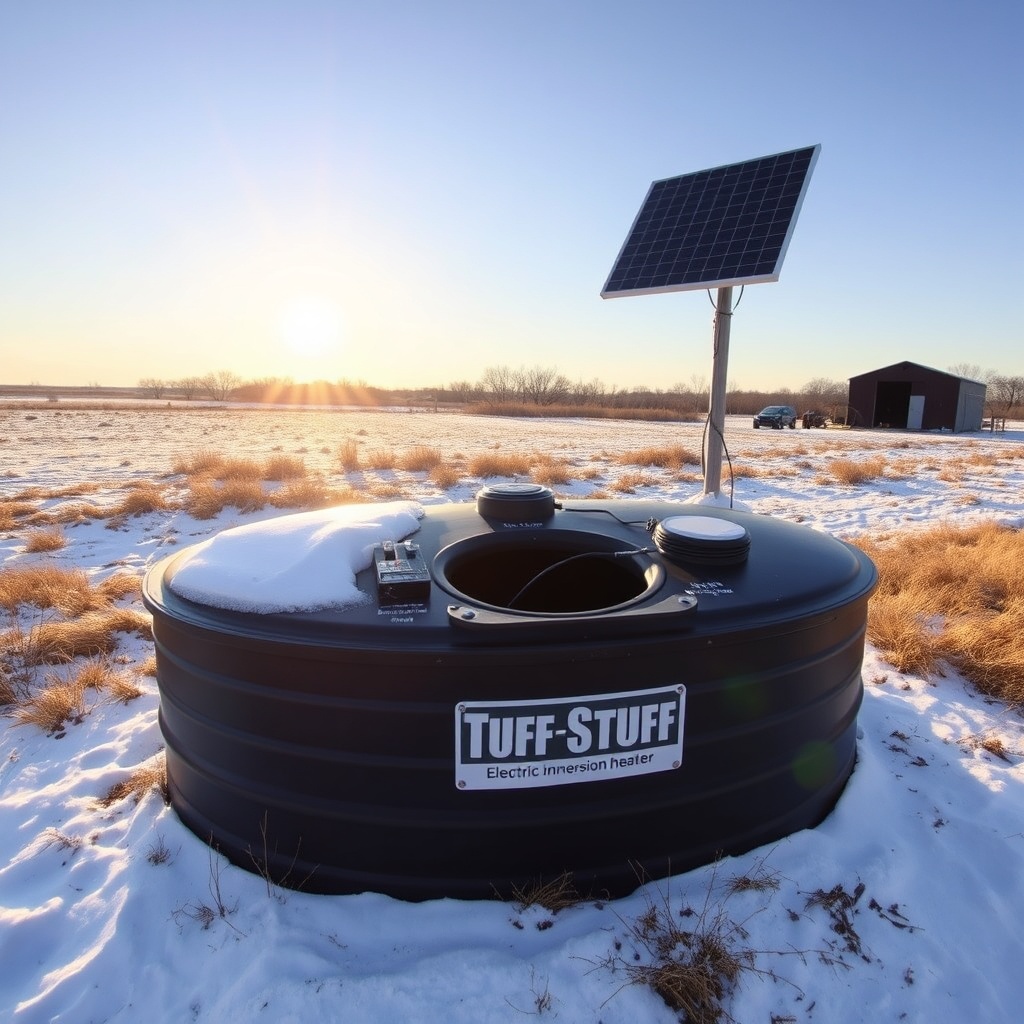
How Do Installation Requirements Compare for the Tuff Stuff 200-Gallon Tank?
Electric heater installation remains straightforward for most farm settings. A weatherproof outdoor GFCI outlet must be located within 6 feet of the tank. The heater itself typically clips onto the tank rim or sits at the bottom, with power cord routed safely away from livestock chewing hazards. For detailed step-by-step instructions, refer to the Tuff Stuff 200-Gallon Stock Tank Winterizing: Heater Installation Guide.
Solar heater installation demands more planning and technical expertise. Panels require a south-facing mounting location with minimal shading from buildings or trees. A battery bank must be housed in a weatherproof enclosure near the tank, with wiring run through conduit to prevent damage. The complete solar setup for a 200-gallon Tuff Stuff tank may take 4 to 8 hours to install, compared to 30 minutes for an electric heater. For eco-conscious owners, the Tuff Stuff 200-Gallon Stock Tank Solar Heater Installation: Eco-Friendly Winterizing guide provides comprehensive instructions.
What Are the Ongoing Operating Costs for Each Heating Method?
Operating costs directly impact the long-term value of each system. The table below breaks down estimated annual expenses for heating a Tuff Stuff 200-gallon tank during a typical 120-day winter season in USDA Zone 5 climates.
| Cost Factor | Electric Heater (1000W) | Solar Heater (300W system) |
|---|---|---|
| Equipment purchase price | $120–$200 | $600–$1,200 |
| Installation cost (DIY) | $0 (self-install) | $0–$100 (mounting hardware) |
| Electricity consumption (per year) | 2,880–4,320 kWh | 0 kWh (grid-free) |
| Electricity cost at $0.14/kWh | $403–$605 per year | $0 per year |
| Battery replacement (every 5 years) | $0 | $150–$300 |
| Maintenance cost (per year) | $10 (cord check) | $30 (panel cleaning, battery care) |
| Lifespan (years) | 3–5 years | 10–15 years (panels), 5 years (batteries) |
| Break-even point (years) | Immediate | 3–5 years depending on electricity rates |
At current average electricity rates in the United States ($0.14 per kWh), an electric heater running 8 to 12 hours daily during freezing periods adds $400 to $600 annually to farm operating costs. Solar systems eliminate this recurring expense but require upfront capital that takes multiple seasons to recover.
Which Heater Works Best in Extreme Cold for the Tuff Stuff 200-Gallon Tank?
Performance in brutal winter weather remains the decisive factor. Electric heaters provide consistent, dependable heat output regardless of sunlight availability. A 1000-watt thermostatically controlled unit maintains water temperature 40°F above ambient, preventing ice even at -30°F when properly sized for a 200-gallon tank. These heaters commonly include automatic shutoff if the water level drops, protecting the Tuff Stuff polyethylene from damage.
Solar heaters lose significant efficiency during consecutive overcast days and night hours unless paired with a substantial battery bank. A 200-gallon mass of water requires approximately 1.4 kWh of energy to prevent freezing for every 24-hour period at 10°F ambient temperature. A solar system with 300 watts of panels and 200 amp-hours of battery storage can sustain operation for 24 to 36 hours without sunlight, but extended cloudy periods may require a backup generator or electric heater. For sizing guidance, consult the How to Choose the Right Stock Tank Heater for Your Tuff Stuff 200-Gallon article.
What Owners Say About Freeze Protection on Their Tuff Stuff 200-Gallon Tanks?
Farmers and ranchers who use the Tuff Stuff 200-gallon tank report distinct experiences with each heating method. Many electric heater users appreciate the “set it and forget it” reliability. Sarah Millbrook, a beef cattle operator in Montana, states: “My 1250-watt electric heater has kept the Tuff Stuff tank ice-free for three winters straight. I plug it in when temps drop below 32°F and don’t worry about it. The electricity cost hurts, but not as much as hauling water when the tank freezes solid.”
Solar adopter Mark Torrance in Colorado explains the trade-off: “I spent $850 on my solar setup, and after four winters, I’m finally ahead of what I would have paid for electric. But I had one week of heavy snow where the panels got buried. I had to run an extension cord from the barn for three days. That was a learning experience.” Owners consistently emphasize that proper installation of the solar array—ensuring panels remain clear of snow accumulation—is critical for consistent performance. The Tuff Stuff tank’s thick walls (typically 0.25 inches) provide some insulation value, but both heating methods still face challenges in extreme cold. For those experiencing physical damage, the How to Repair Cracks in Your Tuff Stuff 200-Gallon Stock Tank guide offers repair techniques that maintain tank integrity after ice damage.
Frequently Asked Questions
1. Can I use an electric heater and solar system together on a Tuff Stuff 200-gallon tank?
Yes, a hybrid approach works effectively. Many owners install a primary solar system with a small electric heater as backup for extended cloudy periods. This reduces overall electricity costs while ensuring redundancy in severe weather. Ensure both systems have separate thermostats to prevent overheating.
2. How long does it take to freeze a Tuff Stuff 200-gallon tank without a heater?
At 20°F ambient temperature with wind, a 200-gallon tank can develop 1 inch of surface ice within 4 to 6 hours. Complete freezing solid through the entire 200-gallon volume may take 48 to 72 hours depending on initial water temperature and wind chill. Livestock cannot break through ice thicknesses exceeding 1.5 inches reliably.
3. What size solar panel array do I need specifically for the Tuff Stuff 200-gallon tank?
Minimum recommended solar capacity is 300 watts of photovoltaic panels combined with 200 amp-hours of deep-cycle battery storage at 12 volts. This configuration provides approximately 2.4 kWh of usable energy per day, sufficient for maintaining open water in temperatures down to 10°F. For colder climates, 400 to 500 watts is advisable.
4. Do electric heaters damage the Tuff Stuff polyethylene material?
No, when used correctly. Tuff Stuff’s linear low-density polyethylene (LLDPE) resists temperatures up to 140°F. Electric heaters with automatic shutoff prevent localized overheating. Never place a heater directly against the tank wall; suspend it in the center of the water column using the supplied bracket for even heat distribution.
5. How much does it cost to run a 1000-watt electric heater for 120 days on a Tuff Stuff 200-gallon tank?
Assuming 10 hours of operation per day at 1000 watts (1 kWh per hour), total consumption equals 1,200 kWh. At $0.14 per kWh, the seasonal cost is $168. However, thermostatically controlled heaters cycle on and off, typically reducing runtime to 6 to 8 hours daily, bringing the cost to $100–$134 per season for most climates.
6. Can I build a DIY solar heater for my Tuff Stuff 200-gallon tank?
Yes, experienced DIYers construct solar water heaters using 400 watts of panels, a 1500-watt inverter, and 300 amp-hours of batteries. Ensure all components are properly rated for continuous outdoor use and protected from moisture. For budget-conscious approaches, the Tuff Stuff 200-Gallon Stock Tank Buying Guide: What to Consider Before Purchase includes cost-saving tips for winterizing your investment.
For size comparisons that affect stocking density and heater placement, see the Tuff Stuff 200-Gallon Stock Tank Size Comparison: How It Measures Up to Smaller Models article.