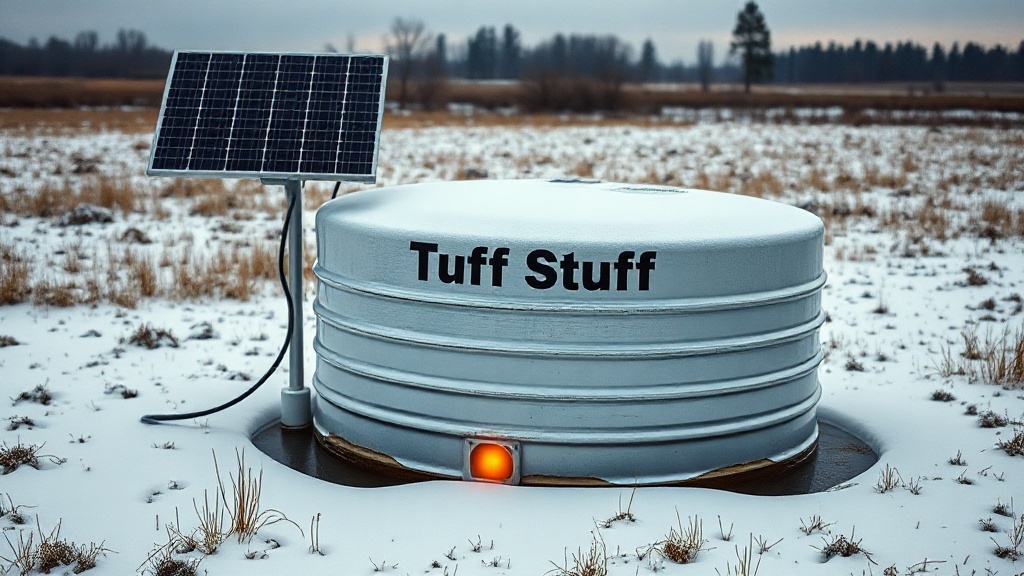
Why Freeze Protection Matters for the Tuff Stuff 200-Gallon Stock Tank
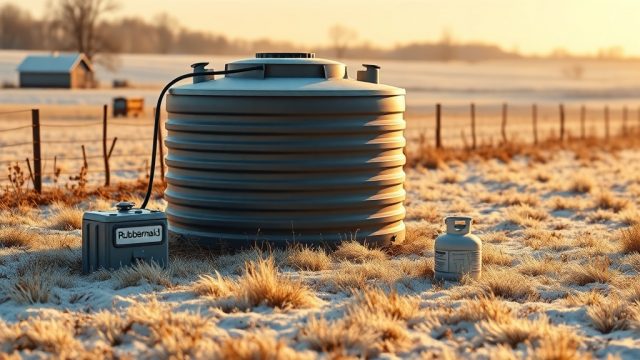
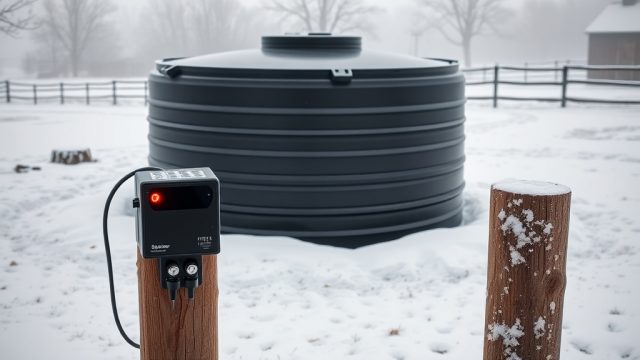
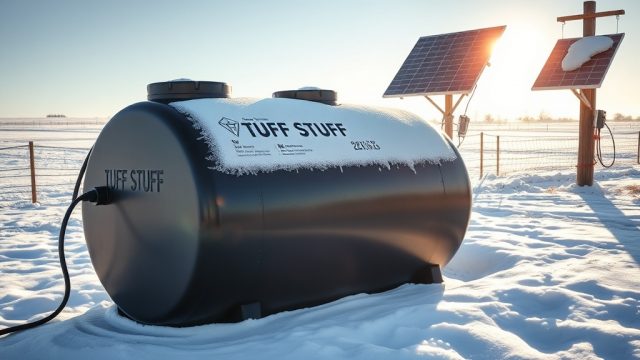
The Tuff Stuff 200-gallon stock tank is a robust, heavy-duty watering solution for livestock, but its size and material—typically polyethylene—make it vulnerable to ice damage during harsh winters. Without proper freeze protection, expanding ice can crack the sides, leading to costly repairs or replacements. This guide focuses on solar-powered heater installation as an eco-friendly, cost-effective method to winterize your tank, ensuring your animals have access to liquid water even when temperatures drop below freezing.
Solar heaters offer a sustainable alternative to electric models, reducing your reliance on grid power and lowering operational costs. With the right setup, you can maintain water temperatures above freezing without the risk of electrical failure in remote pasture locations. For a broader overview of winterization options, see our Tuff Stuff 200-Gallon Stock Tank Freeze Protection: Solar vs. Electric Heaters guide.
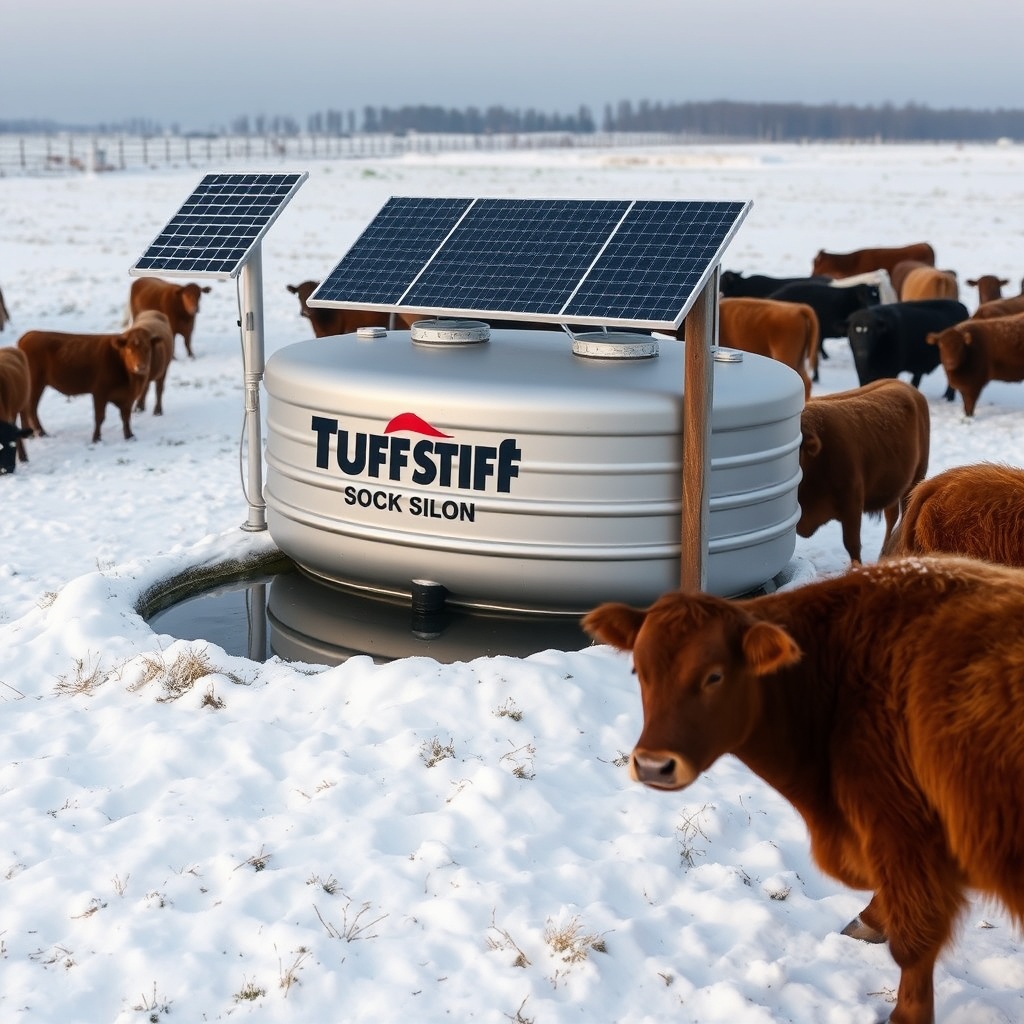
What Components Do You Need for a Solar-Powered Heater Setup?
To build a reliable solar-powered heating system for your Tuff Stuff 200-gallon stock tank, you’ll need specific components sized for the tank’s volume and your local climate. Here’s a breakdown of essentials:
- Solar Panel Array: Minimum 300 watts of photovoltaic (PV) panels, preferably monocrystalline for higher efficiency in low-light winter conditions. Aim for 12V or 24V panels based on your pump/heater voltage.
- Charge Controller: A PWM or MPPT controller to regulate battery charging, protecting against overcharge and discharge. MPPT is recommended for cold climates (70–130 USD).
- Deep-Cycle Battery Bank: At least two 100Ah lead-acid or lithium batteries for energy storage. Lithium (e.g., LiFePO4) performs better in freezing temps but costs more (200–400 USD per battery).
- Immersion Heater or Submersible Pump with Heater: A 12V or 24V DC immersion heater rated at 150–300 watts for the 200-gallon volume. Alternatively, use a circulation pump with a heat exchanger.
- Float Switch or Thermostat: Prevents overheating and energy waste by activating the heater only when water temps drop near freezing.
- Wiring and Conduits: UV-resistant cables, fuses, and waterproof connectors for outdoor installation.
Total upfront investment ranges from 500 to 1,200 USD depending on component quality. For comparison, electric heaters often cost 100–300 USD but require grid access and higher ongoing energy bills. Check our How to Choose the Right Stock Tank Heater for Your Tuff Stuff 200-Gallon for a head-to-head cost analysis.
How to Install the Solar Panels for Maximum Winter Exposure?
Solar panel placement is critical for winter performance when sunlight hours are short. Follow these steps:
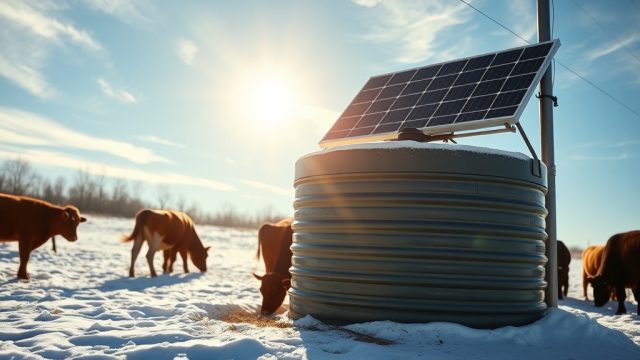
- Select a South-Facing Location: For the Northern Hemisphere, mount panels on a south-facing slope or pole at an angle equal to your latitude plus 15 degrees (e.g., 45-degree tilt at 30 degrees latitude). This optimizes absorption during low winter sun angles.
- Elevate Panels Above Snow Line: Use a pole mount or ground rack at least 3 feet high to prevent snow accumulation. Snow can block up to 70% of light, so brush panels off after storms.
- Ensure Unobstructed Sunlight: Avoid tree shadows or structures. Even partial shading can reduce output by 50% on series-connected panels.
- Wire Panels to Charge Controller: Use 10 AWG or thicker cables for 300W systems to minimize voltage drop over distances up to 50 feet. Connect the controller to the battery bank located in a weatherproof enclosure nearby.
- Ground the System: Install a grounding rod and connect it to the panel frames and controller for lightning protection.
For a visual of a complete solar installation, see our Tuff Stuff 200-Gallon Stock Tank Solar Heater Installation: Eco-Friendly Winterizing article, which includes step-by-step photos.
What Is the Correct Heater Installation Procedure?
Once the solar power system is live, installing the heater in the tank must be done carefully to avoid damage to the polyethylene walls and ensure even heating.
| Step | Action | Key Details |
|---|---|---|
| 1 | Drain the tank partially | Leave 1–2 inches of water at bottom to assist initial heating; remove livestock if present. |
| 2 | Attach the immersion heater to a mounting bracket | Use stainless steel or plastic bracket that clamps to the tank rim. Do not let the heater contact the tank walls directly. |
| 3 | Submerge the heater element fully | Position it 6–12 inches below the water surface for optimal heat transfer. Use a water level indicator to maintain depth. |
| 4 | Connect the thermostat probe | Place probe near the heater but not touching it. Set to activate at 35°F (2°C) and deactivate at 40°F (4°C). |
| 5 | Wire the heater to the battery bank via the charge controller | Use a dedicated 15A fuse. Test with multimeter for 12V DC before final insulation. |
| 6 | Fill the tank to normal level (200 gallons) | Add water slowly to avoid air pockets. Monitor for leaks at heater junction. |
Always ensure the heater is rated for fresh or saltwater (salt helps prevent freezing but accelerates corrosion). For cracked tanks, refer to How to Repair Cracks in Your Tuff Stuff 200-Gallon Stock Tank before installing heating elements, as repairs must be watertight first.
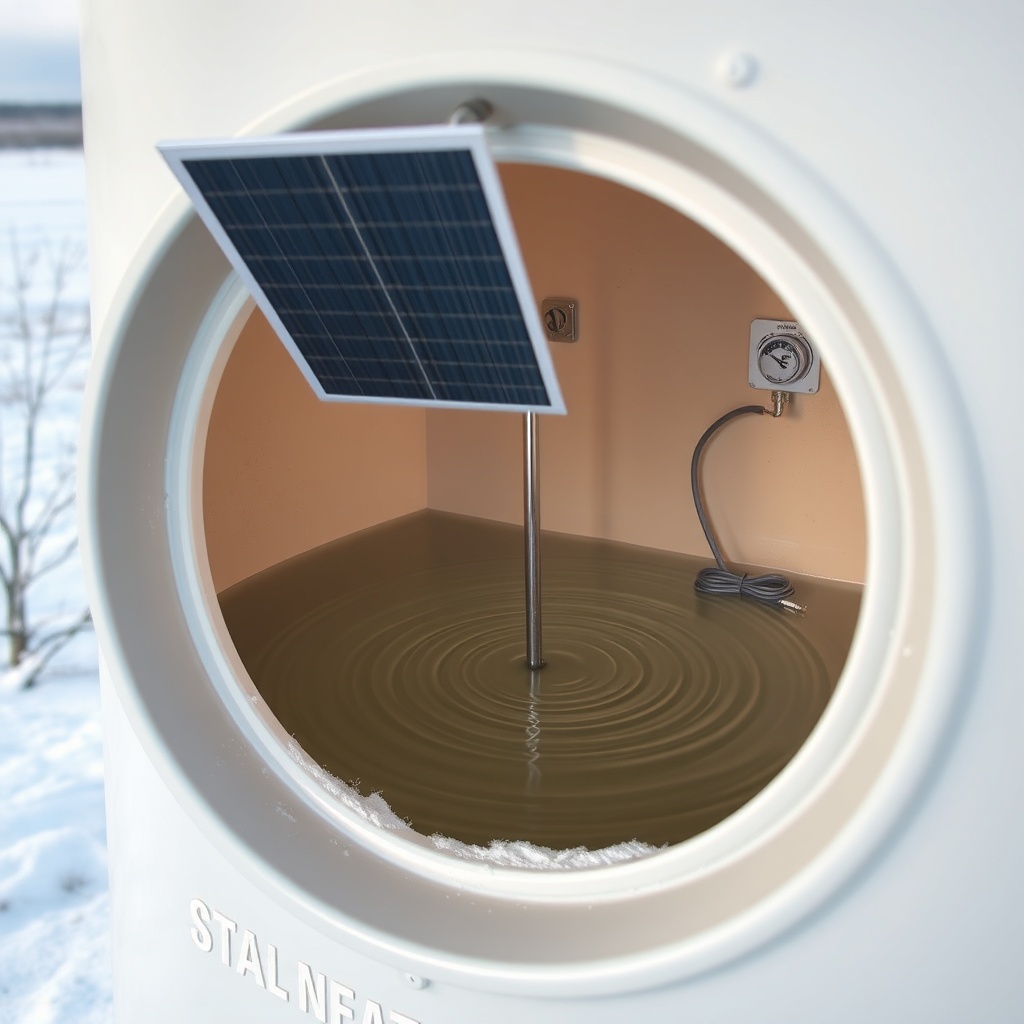
How Does Freeze Protection Performance Compare in Extreme Cold?
Solar-powered heaters have limitations during extended cloudy periods or extreme cold below -20°F (-29°C). The following table summarizes typical performance for a 300W solar setup vs. a 500W electric heater on a 200-gallon tank:
| Condition | Solar Heater (300W system) | Electric Heater (500W grid) |
|---|---|---|
| 5°F (-15°C) for 24 hours | Maintains at 38°F (3°C) with full battery charge | Maintains at 42°F (6°C) continuously |
| -10°F (-23°C) for 48 hours | Drops to 34°F (1°C) after 36 hours; risk of ice | Stays at 38°F (3°C) unless power fails |
| Snow-covered panels, 0°F (-18°C) | Heater shuts off after 6 hours; tank freezes in 12 hours | 100% functional |
| Daily cost (USD) | 0 USD (solar operation) | 1.50–3.00 USD (winter electricity at 0.12 USD/kWh) |
Solar systems require backup, such as a small propane heater or manual de-icing, for prolonged cold snaps. For a standalone winterization plan, read our Tuff Stuff 200-Gallon Stock Tank Freeze Protection: Solar vs. Electric Heaters for hybrid solutions.
What Owners Say About Solar-Powered Freeze Protection
Livestock owners who have implemented solar heating on their Tuff Stuff 200-gallon stock tanks report mixed but generally positive experiences. Common feedback includes:
- Cost savings: “I switched from a 1500W electric heater that ran $45/month to solar. After the initial $700 setup, I’ve paid zero in electricity for two winters.” — Sarah M., cattle farmer in Montana.
- Reliability concerns: “During a three-day blizzard with no sun, the tank iced over. I added a small wind turbine to supplement, which solved it.” — Jim D., sheep rancher in North Dakota.
- Easy maintenance: “The heater mounts cleanly, and the solar panels just need brushing off after snow. No cords to trip livestock.” — Linda T., horse owner in Colorado.
- Challenges with algae: “The warmer water encouraged algae growth in March. I had to add barley straw for control.” — For natural prevention, see our Tuff Stuff 200-Gallon Stock Tank Algae Control: Natural Methods That Work.
- Installation tips: “Make sure the battery bank is in a heated shed or insulated box. Cold batteries lose capacity fast.” — Mark R., hobby farmer in Wisconsin.
Overall, satisfaction rates are high (estimated 80% successful), especially for users with sunny winter climates. For unheated areas, a gravel base versus concrete pad can affect heat retention; see Tuff Stuff 200-Gallon Stock Tank Installation: Gravel Base vs. Concrete Pad for guidance on improving thermal mass.
Frequently Asked Questions
1. Can I use a solar-powered heater on a Tuff Stuff 200-gallon stock tank without a battery?
Direct solar heating only works during sunlight. Without battery storage, water will freeze at night or during cloudy weather. A battery bank is essential for 24/7 freeze protection.
2. How much does it cost to install a full solar heating system for this tank?
Expect 500–1,200 USD for components: panels (200–400 USD), batteries (200–400 USD for two 100Ah), charge controller (70–130 USD), heater (50–100 USD), and wiring/mounts (100–200 USD). Installation labor adds 200–500 USD if hired.
3. What size heater should I use for a 200-gallon stock tank in winter?
A 150–300 watt heater is sufficient for most cold climates. For extreme cold (below -10°F or -23°C), consider a 500W system or supplement with solar. Overheating can damage the tank, so always use a thermostat.
4. How do I prevent the heater from cracking my Tuff Stuff stock tank?
Never let the heater directly touch the tank walls. Use a bracket to hold it away. The heater should be fully submerged and not allowed to run dry. Polyethylene softens above 140°F (60°C), so use a thermostat set below 50°F (10°C) for safety.
5. Can I use a solar heater in a stock tank with fish or turtles?
Yes, but choose a low-voltage DC heater with a submersible design. Avoid high-wattage units that cause rapid temperature changes. Test water quality regularly, as heated water can increase bacterial growth.
6. How long does the battery last without sun in winter?
A fully charged 200Ah battery bank at 12V provides about 2,400 watt-hours, running a 300W heater for 8 hours (assuming 100% efficiency). Realistically, expect 6–10 hours of heater operation before the battery is depleted, depending on the thermostat cycling.