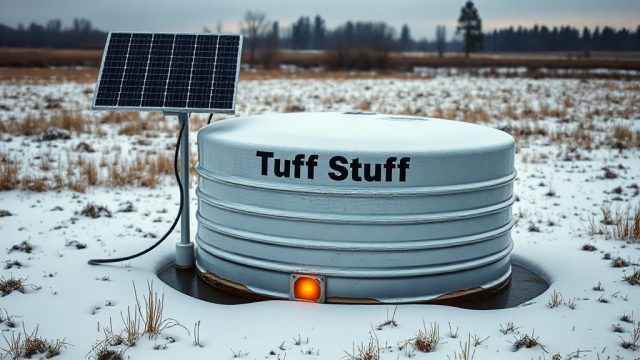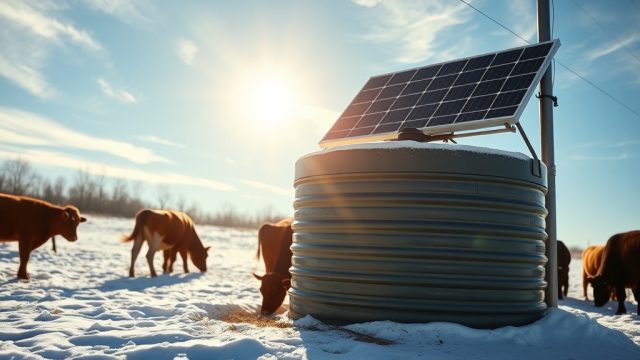
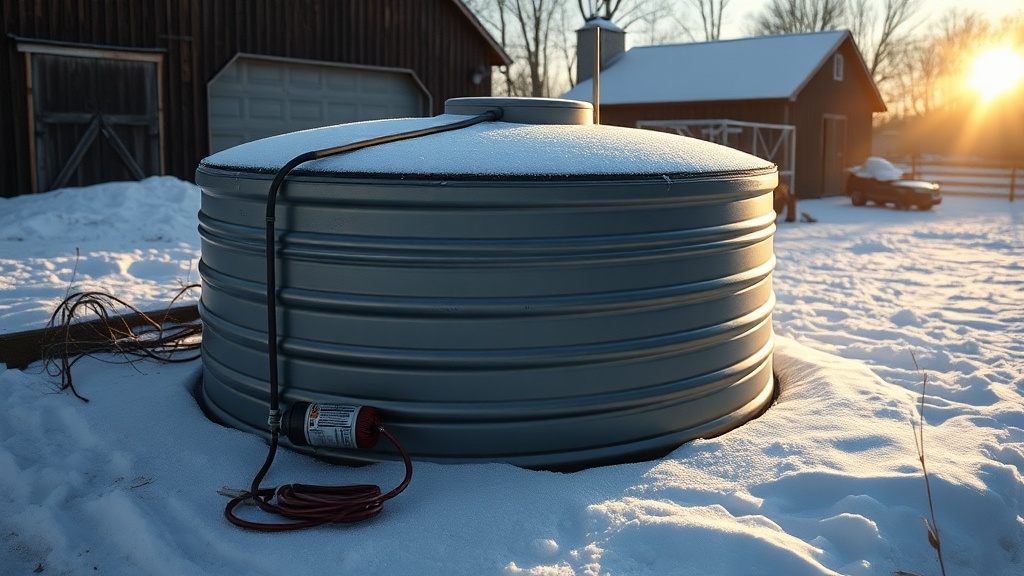
Why Does the Tuff Stuff 200-Gallon Stock Tank Need Winterizing?
When winter temperatures drop below freezing, a 200-gallon stock tank becomes a solid block of ice without proper protection. Thawing a frozen tank can crack the polyethylene, destroy float valves, and stress heater components. The Tuff Stuff 200-gallon stock tank, with its heavy-duty roto-molded construction, resists basic cracking better than thin-walled tanks, but the internal water expansion still exerts 2,200 PSI of force as ice forms. Worse, a solid freeze blocks livestock access to drinking water for 12-18 hours, leading to dehydration risks and reduced feed intake.
Installing a submersible or de-icer heater is the most direct freeze-prevention method. Heaters are designed to keep a small area around the element above 0.5°C, preventing ice formation across the water surface. According to operational data from the How to Protect Your Tuff Stuff 200-Gallon Stock Tank from Freezing guide, thermostatically controlled heaters reduce energy use by 40% compared to unregulated models. However, heater installation requires careful sizing, placement, and electrical safety—mistakes here can melt the tank wall or cause electrical hazards.
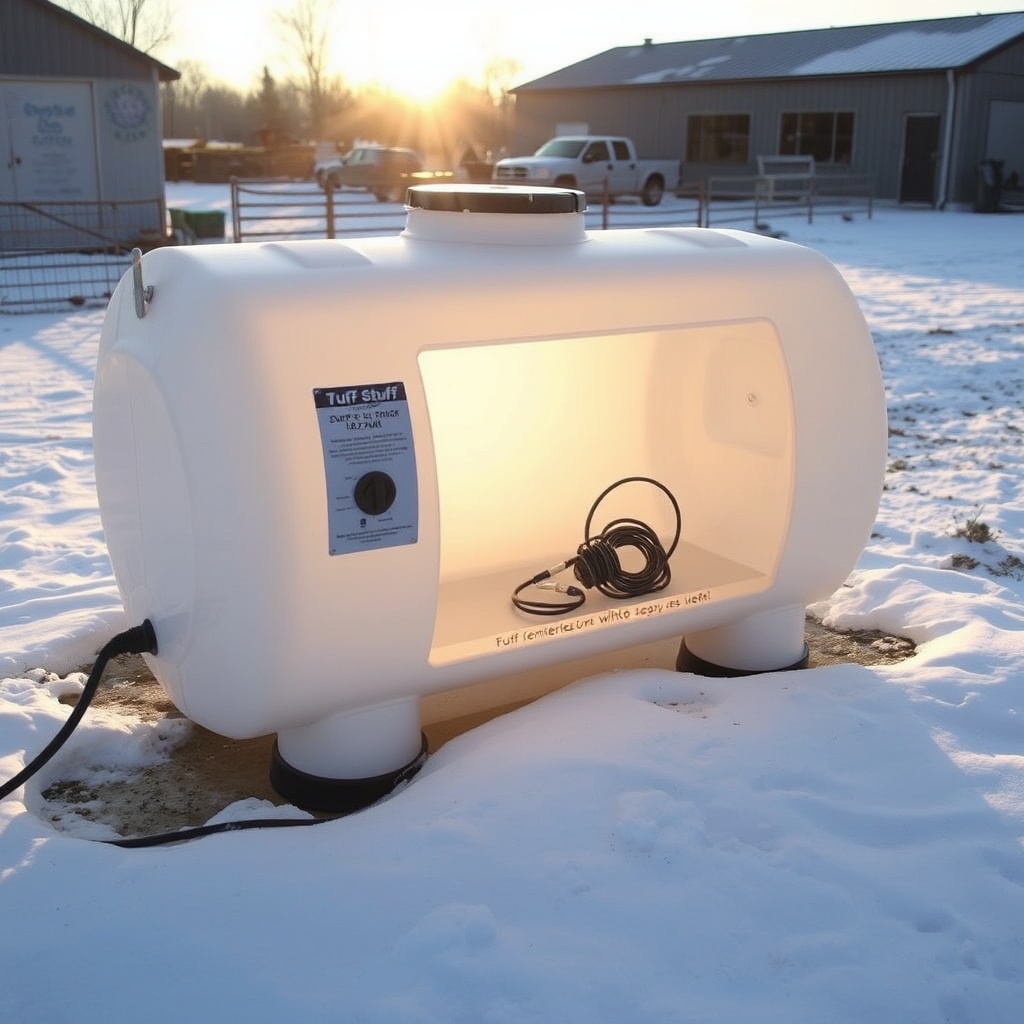
What Heater Options Work With the Tuff Stuff 200-Gallon Stock Tank?
Three primary heater types fit the Tuff Stuff tank: submersible de-icers, floating de-icers, and tank-side inline heaters. Submersible models (e.g., 1,250W–1,500W units) are most common for the 200-gallon size. Brands such as Agri-Supply and Farm Innovators offer thermostatically controlled submersible heaters that activate at 40°F and deactivate at 45°F, drawing around 10.5 amps at 120V. Floating de-icers (e.g., Allied Precision 1,500W) provide ice-free holes but require a stable bracket to prevent drifting into the tank walls. Tank-side inline heaters are rarer and typically used for pipe-fed tanks; for the standalone Tuff Stuff, submersible heaters are simplest.
Key measurements: the Tuff Stuff tank measures 72 inches in diameter and 22 inches deep. A 1,250W heater maintains an ice-free opening of roughly 18 inches in diameter in ambient temperatures down to -12°C (10°F). For colder regions (-20°C or lower), a 1,500W heater is recommended. Operating cost at average UK electricity rates (28p per kWh) for a 1,250W heater running 12 hours/day is approximately £4.20 per day. In US terms (15¢/kWh), it runs about $2.25/day.
| Min Ambient Temperature | Heater Wattage | Daily Operating Cost (UK 28p/kWh) | Daily Operating Cost (US 15¢/kWh) | Ice-Free Opening Diameter |
|---|---|---|---|---|
| 0°C to -6°C | 1,000W | £3.36 | $1.80 | 12 inches |
| -7°C to -15°C | 1,250W | £4.20 | $2.25 | 18 inches |
| -16°C to -25°C | 1,500W | £5.04 | $2.70 | 22–24 inches |
| Below -25°C | 1,500W + insulation wrap | £5.04 + insulation | $2.70 + insulation | 26–30 inches |
Notice that the heater must not directly contact the tank walls—the Tuff Stuff’s polyethylene can soften at 70°C (158°F), and a heater’s internal element can reach 180°F. Use a heater guard or suspend the unit on a nylon rope from a crossbar so it sits 6–8 inches above the tank bottom and 4 inches from any wall. This prevents heat concentration on one area of the plastic.
How Do You Install a Submersible Heater Without Damaging the Tank?
Step one: ensure the tank is clean and filled to at least 75% capacity. A How to Deep Clean Your Tuff Stuff 200-Gallon Stock Tank: Step-by-Step Guide should be performed before winter to remove algae and debris that could short the heater. Step two: inspect the heater’s power cord for cracks or damage. The cord must be a three-prong grounded plug for a GFCI-protected outdoor outlet. Never use an extension cord unless it’s rated for outdoor use and heavy-amperage (14-gauge minimum for 1,250W/10.5A; 12-gauge for 1,500W/12.5A).
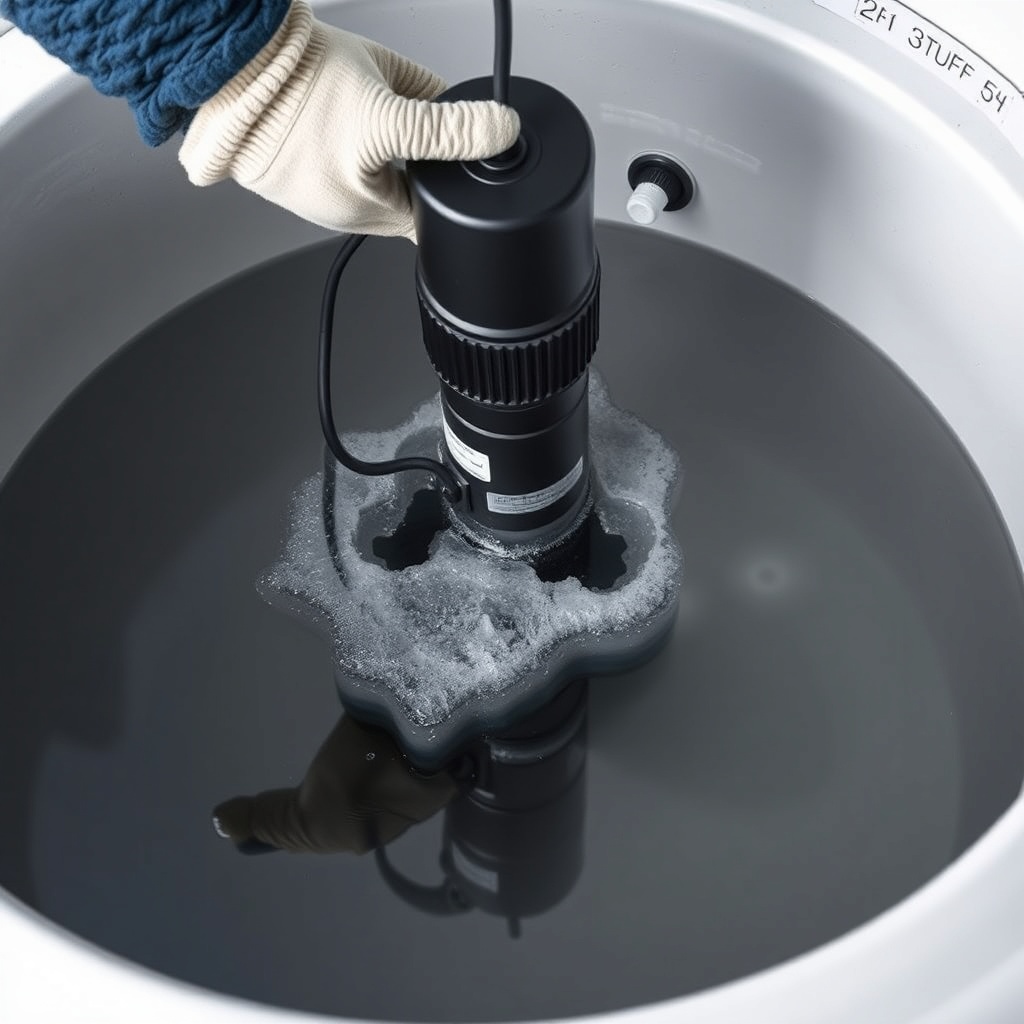
Step three: lower the heater into the water vertically, never sideways. Position it near the tank’s center, but offset slightly toward one side so livestock can access the ice-free hole. Secure the heater’s rope or bracket to the tank rim using a clamp or bungee cord, ensuring the heater cannot float upward and touch the surface ice. Step four: plug into the GFCI outlet and test the heater by lowering the thermostat setting. Wait 15 minutes; the heater should cycle on when water temperature drops to 38°F. If you notice the heater running continuously without cycling, the thermostat is likely faulty—replace immediately. The Tuff Stuff 200-Gallon Stock Tank Heavy-Duty Features: What Makes It Durable article notes that the tank’s reinforced wall thickness (7.5 mm at the bottom) allows for slight overhang mounting of heater brackets, but never drill through the tank wall for mounting—use surface clips.
What Electrical Safety Measures Are Essential for Heater Installation?
Water and electricity demand extreme caution. The GFCI (Ground Fault Circuit Interrupter) is non-negotiable. Install a weatherproof GFCI outlet at least 6 feet from the tank. Test the GFCI monthly by pressing the “test” button; if it doesn’t trip, replace the outlet. The heater’s cord should have a strain relief where it exits the tank—a simple knot tied outside reduces tension on the internal connections. Cords must be plugged directly into the GFCI, not into a power strip or multi-tap.
Inspect the heater’s prongs for corrosion every 2 weeks during winter. Corroded prongs increase resistance and create heat—this is the leading cause of heater fires in stock tanks. Use a dielectric grease on the prongs before insertion. The heater’s thermostat housing is usually sealed, but submersion depth matters: the manufacturer’s minimum submersion line is 12 inches for 1,250W models. Running a heater partially exposed can cause the metal sheath to crack, exposing the element to water and tripping the GFCI.
Do not attempt to use a household space heater or heat lamp—they are not rated for water contact. Always buy a listed/de-icer certified by a national safety agency. In the EU, look for CE or UKCA markings; in the US, UL or ETL listing. The cost of a quality heater (£60–£120 or $75–$150) is far less than the damage from a cracked tank or home fire. The Tuff Stuff 200-Gallon Stock Tank Buying Guide: What to Consider Before Purchase includes a checklist for electrical compatibility on your property.
How Do You Maintain Water Quality and Heater Efficiency Through Winter?
Livestock drink less when water is cold, but they still need approximately 10–15 gallons per cow (UK: 45–68 litres) per day. The heater must keep water above 0.5°C to prevent freezing, but water quality can degrade due to reduced turnover. Stagnant water permits bacteria growth, which is more dangerous in winter when animals cannot flush the bacteria through increased water intake. The solution: test water weekly for pH (ideal 6.5–8.5), ammonia (below 0.25 ppm), and bacteria using Tuff Stuff 200-Gallon Stock Tank Water Quality Testing: How to Ensure Safe Drinking Water for Livestock protocols.
Heater efficiency drops significantly when mineral deposits (lime scale) build up on the heating element. In hard water areas (200+ ppm calcium carbonate), scale layer of 1/16 inch reduces heat transfer by 8% and increases runtime by 15 minutes per hour. Descale the heater at least every 6 weeks by soaking the element in a 5% white vinegar solution for 20 minutes (unplugged, fully cooled). Rinse thoroughly before reinserting. Furthermore, the heater’s thermostat can drift after months of continuous use—calibrate it once per month by placing a separate thermometer 6 inches from the heater, then adjusting the thermostat dial so the heater cycles on at 38°F (3.3°C).
What Owners Say About Tuff Stuff Tank Heater Installation
Jeremy from Wisconsin, USA, runs a herd of 30 Angus cattle on the Tuff Stuff tank: “I installed a 1,250W de-icer last November. The tank’s thick walls keep the water warmer longer than the old rubber tank. But I learned the hard way—I had the heater too close to the rim, and it melted a small groove into the plastic. The heater guard was worth the extra £20.” Sarah from Devon, UK, uses a 1,000W heater with a thermostat: “Our winters aren’t as harsh, but it still drops to -5°C for a week. The heater keeps a 14-inch hole open, and the cattle drink fine. I do complain about the electric bill—£35/month for the heater alone. I’m trying a floating ball cover to cut the heat loss.” Marcus from Minnesota reported: “We get -30°C for days. Go with 1,500W and insulate the tank sides with 2-inch foam board. My heater runs 20 hours a day in those temps, but the tank never freezes solid. I use the Tuff Stuff 200-Gallon Stock Tank Siphon Drain Setup: Effortless Water Changes to drain completely during thaw days and scoop out the ice plates.”
Frequently Asked Questions
Q: Can I use a solar-powered heater on the Tuff Stuff 200-gallon tank?
A: Not effectively. Solar panels produce limited wattage (typically 100–300W for residential panels), far below the 1,000W minimum needed to keep a 200-gallon tank ice-free. Solar power could work with a battery bank and an inverter to run a 1,250W heater for 4–6 hours/day, but the cost of panels and batteries often exceeds £3,000—not practical for most farm budgets. Stick to grid-powered heaters.
Q: Will a heater crack the Tuff Stuff tank if left on during a power outage?
A: No, the heater itself won’t crack the tank. But if power is lost for 8+ hours in subfreezing temps, the water may freeze and expand, potentially stressing the tank walls. The Tuff Stuff material (linear polyethylene) can handle one or two freeze-thaw cycles, but repeated freezing can cause micro-cracks. Solution: drain the tank during prolonged outages using the siphon drain mentioned earlier.
Q: How deep should the heater be submerged?
A: Most submersible heaters require a minimum submersion depth of 6–12 inches. For a 22-inch-deep Tuff Stuff tank, place the heater on a small ledge or hang it so the bottom of the element sits 8 inches above the tank floor. This ensures the thermostat senses the core water temperature, not the bottom sediment.
Q: Is it safe to leave the heater plugged in when the tank is empty?
A: Absolutely not. Running a submersible heater in air destroys the element within minutes—the metal sheath reaches 250°C and can ignite nearby plastic components. Always unplug the heater before draining or cleaning the tank. Mark the cord with a red tag as a reminder.
Q: What size thermostat setting works best for the Tuff Stuff 200-gallon tank?
A: Set the thermostat to 38°F (3.3°C). This keeps water above freezing while minimizing electrical usage. Higher settings (50°F/10°C) waste energy, and lower settings (32°F/0°C) risk an ice layer forming around the heater. The heater should cycle on when water reaches 36°F and off at 42°F.
Q: How can I plug the heater into a GFCI outlet far from the tank?
A: Use a heavy-duty, outdoor-rated, 12/3 gauge extension cord rated for 15 amps minimum. Keep the cord length under 50 feet (15 metres) to avoid voltage drop. Always ball up the extra cord length and hang it off the ground to prevent water ingress. Never lay the cord flat on snow or mud—it will degrade the insulation.