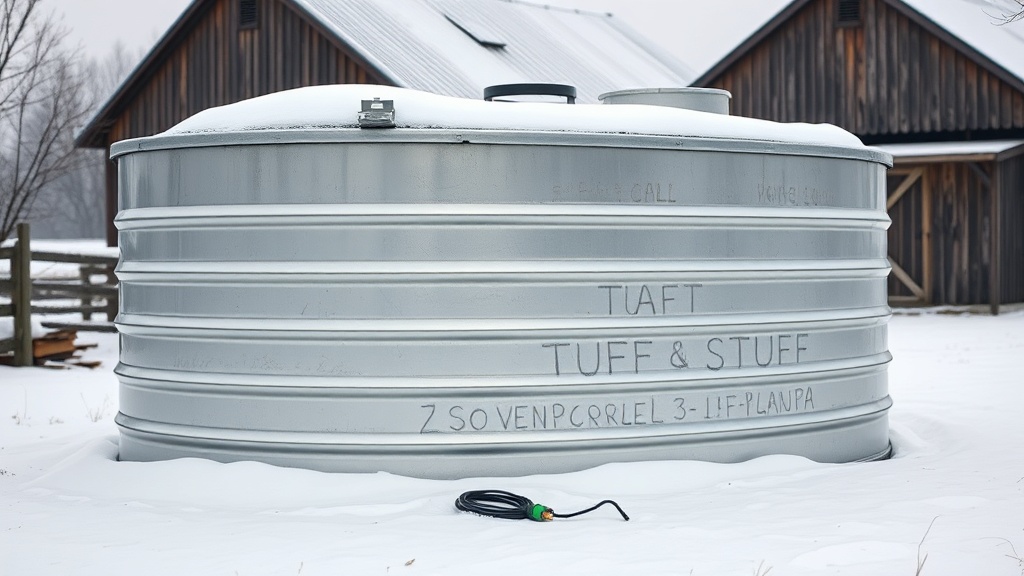
How to Choose the Right Stock Tank Heater for Your Tuff Stuff 200-Gallon
Keeping your Tuff Stuff 200-Gallon Stock Tank ice-free during the winter months is essential for livestock health and tank longevity. A poorly chosen heater can waste energy, fail to protect against freezing, or even damage the tank. This guide walks you through selecting the optimal heater, considering wattage, material compatibility, and installation considerations specifically for the 200-gallon model.
Whether you are preparing for a harsh Northern winter or a milder cold snap, understanding heater specifications and your tank’s thermal dynamics will save you money and prevent emergency repairs. We cover everything from energy consumption to safety features, ensuring your water stays liquid and your animals stay hydrated.
What Heater Wattage Is Required for a 200-Gallon Stock Tank?
Selecting the correct wattage is the most critical decision. A heater too weak will be overwhelmed by ambient cold, while an oversized unit wastes electricity and may stress your electrical system. For the Tuff Stuff 200-Gallon Stock Tank, which holds approximately 750 liters of water, you need a heater that can maintain above-freezing temperatures even when air temperatures drop to -20°C (-4°F).
General guidelines for stock tank heaters are based on water volume and expected lowest temperature. For moderate climates (lowest around -10°C or 14°F), a 1,200-watt heater may suffice. For severe winters where temperatures plunge below -20°C, consider a 1,500-watt or even 2,000-watt unit. However, always match the heater to your specific conditions and tank insulation.
Wattage Recommendation Table for Tuff Stuff 200-Gallon
| Lowest Expected Temperature | Recommended Heater Wattage | Annual Energy Cost (CAD $)* | Water Temperature Maintained |
|---|---|---|---|
| -5°C to -10°C (23°F to 14°F) | 1,000 – 1,200 watts | $180 – $220 | 4°C – 6°C (39°F – 43°F) |
| -10°C to -20°C (14°F to -4°F) | 1,500 watts | $250 – $300 | 3°C – 5°C (37°F – 41°F) |
| Below -20°C (-4°F) | 2,000 watts (or two 1,000-watt units) | $350 – $420 | 2°C – 4°C (36°F – 39°F) |
*Approximate annual cost based on 5 months of operation, 10 hours per day at CAD $0.12 per kWh. Actual costs vary.
For a more detailed look at installation methods, see our guide on Tuff Stuff 200-Gallon Stock Tank Winterizing: Heater Installation Guide.
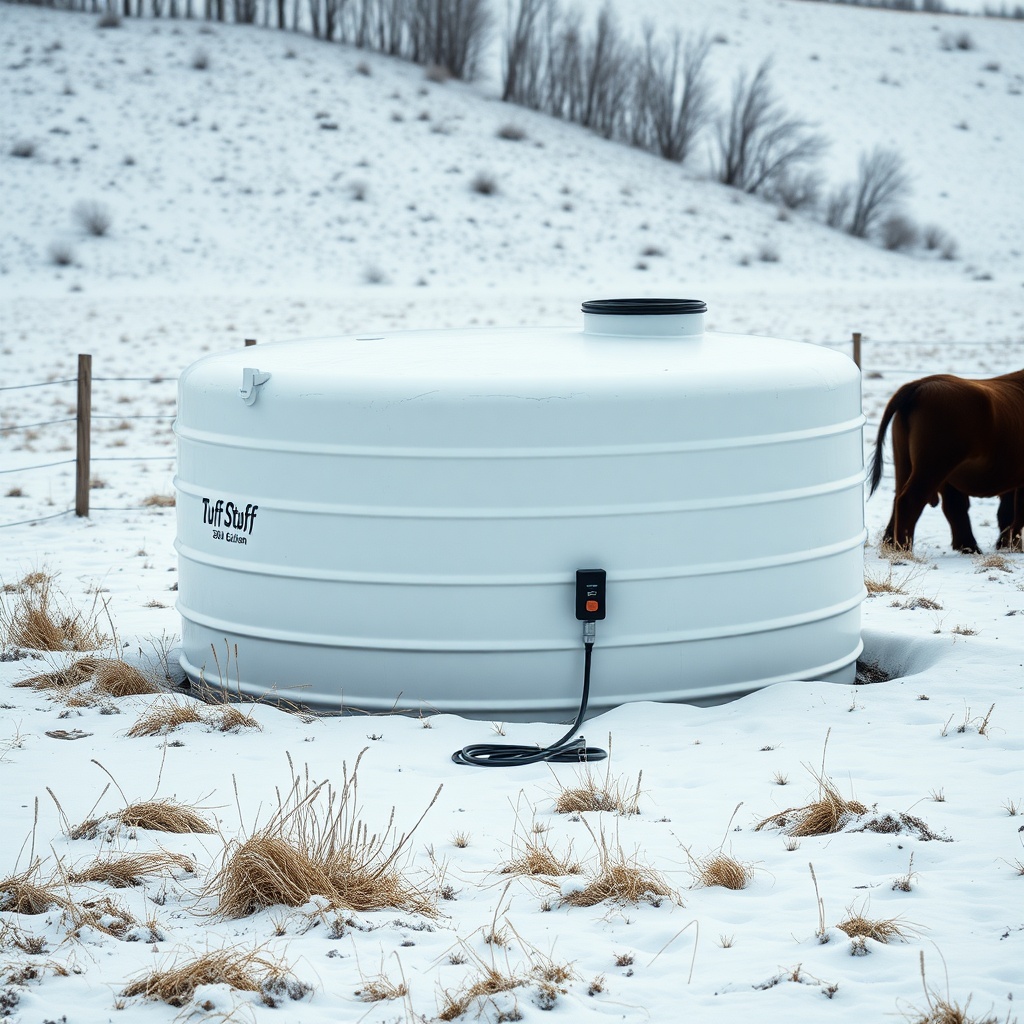
Which Heater Types Are Compatible with the Tuff Stuff 200-Gallon?
Not all heaters work well with galvanized steel or plastic stock tanks. The Tuff Stuff 200-Gallon is made from heavy-duty galvanized steel, which is durable but conductive. You have three primary heater categories: submersible, floating, and in-line circulation heaters. Each has pros and cons.
Submersible Heaters
These sit directly in the water, fully submerged. They are efficient and widely used. Choose a model with a built-in thermostat and automatic shutoff to prevent dry firing. Ensure the unit is rated for fresh water and has a grounded cord. For the 200-gallon tank, a 1,500-watt submersible heater is a common choice. They heat water directly but require careful placement to avoid contact with the tank’s metal walls, which can cause hot spots.
Floating (De-Icer) Heaters
Floating heaters are designed to keep a small area of water open. They are lower wattage (often 1,000 watts) and maintain a hole in the ice rather than heating the entire tank. They consume less energy but do not prevent water from freezing entirely. These are suitable for moderate climates or as a supplement to a more powerful system. However, they can be displaced by ice movement.
In-Line Circulation Heaters
These are installed outside the tank, pumping water through a heating element and back. They can be very efficient for large volumes, but installation is more complex, often requiring plumbing modifications. For the Tuff Stuff 200-Gallon, an in-line system might be overkill unless you have multiple tanks. They are less common for single-tank setups.
For eco-friendly options, read about Tuff Stuff 200-Gallon Stock Tank Solar Heater Installation: Eco-Friendly Winterizing.
How Do I Calculate Energy Consumption and Operating Costs?
Understanding your heater’s electrical draw helps you budget and ensures your circuit can handle the load. A standard household circuit in North America is 15 amps at 120 volts, providing 1,800 watts maximum. A 1,500-watt heater uses 12.5 amps continuously, which is near the limit. Dedicated circuits are recommended.
To calculate daily energy use: watts × hours used ÷ 1000 = kilowatt-hours (kWh). For a 1,500-watt heater running 18 hours per day: 1500 × 18 ÷ 1000 = 27 kWh per day. At CAD $0.12/kWh, that’s $3.24 per day, or about $97 per month. Over a 5-month winter, that totals around $486. However, thermostatically controlled heaters cycle on and off, so actual usage is typically 50-70% of continuous run time.
Energy Cost Comparison Table
| Heater Wattage | Daily kWh (18 hrs) | Daily Cost (CAD) | Monthly Cost (CAD) | 5-Month Winter (CAD) |
|---|---|---|---|---|
| 1,000W | 18 kWh | $2.16 | $64.80 | $324 |
| 1,500W | 27 kWh | $3.24 | $97.20 | $486 |
| 2,000W | 36 kWh | $4.32 | $129.60 | $648 |
These figures assume 18 hours of actual heating per day. With a good thermostat and insulation, you can reduce run time. Adding a floating cover or tank insulation can cut energy consumption by 20-30%.
What Safety Features Should the Heater Have?
Safety is paramount when dealing with electricity and water. The Tuff Stuff 200-Gallon is metal, so grounding is critical. Look for these features:
- GFCI Protection: Ground Fault Circuit Interrupter plugs or built-in GFCI are mandatory. They shut off power if a ground fault is detected.
- Automatic Thermostat: Prevents overheating and dry firing. It cycles the heater on only when water temperature drops near freezing.
- Over-Temperature Shutoff: If the thermostat fails, this backup cuts power to prevent damage.
- Rugged Construction: Stainless steel or titanium heating elements resist corrosion. PVC housings should be UV-resistant to prevent cracking.
- Submersion Depth Mark: Clear markings ensure the heater is placed at the correct depth, avoiding exposure to air.
Also, ensure the power cord is heavy-duty, 3-prong grounded, and long enough to reach a weatherproof outlet. Never use extension cords with heaters; run a dedicated line if needed. For winter preparation, see Tuff Stuff 200-Gallon Stock Tank Siphon Drain Setup: Effortless Water Changes for draining before first frost.
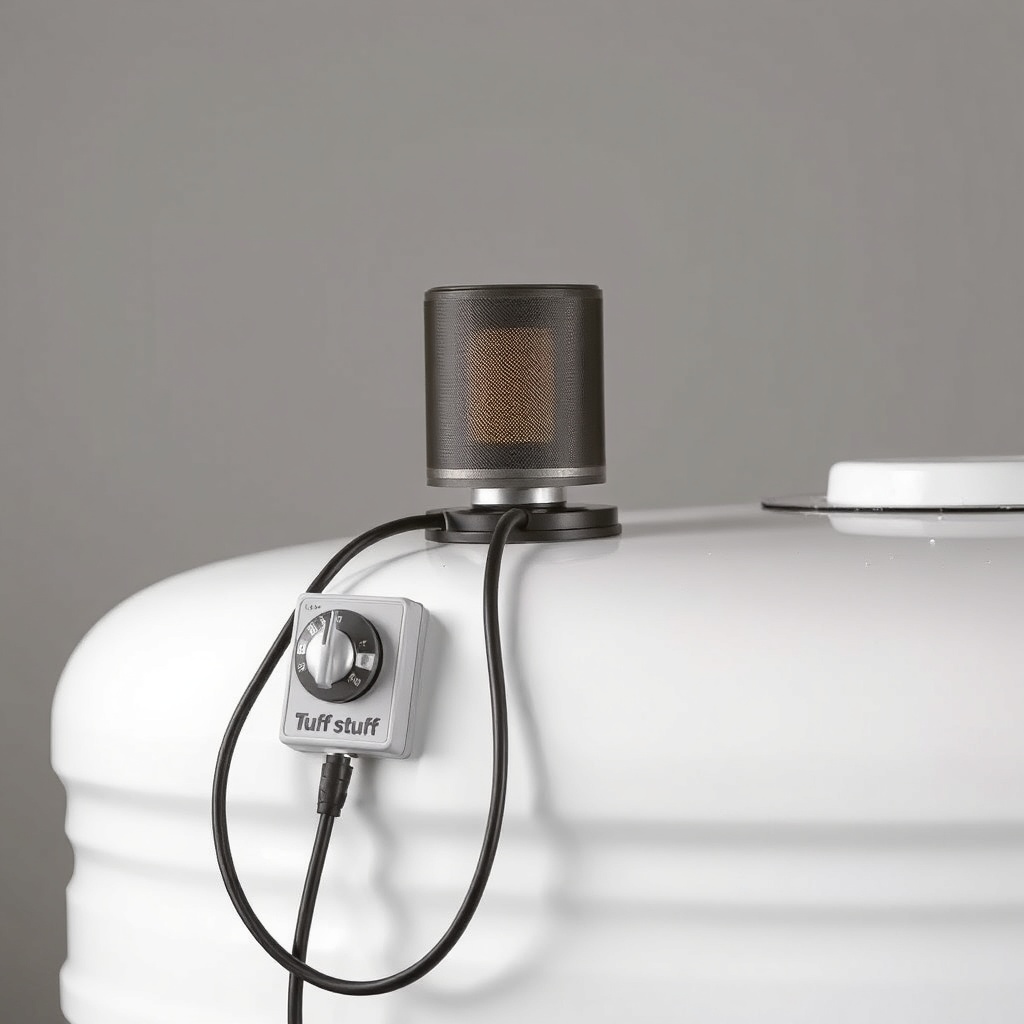
How Does Tank Location Affect Heater Performance?
Where you place the Tuff Stuff 200-Gallon influences how hard the heater has to work. If the tank sits in an exposed, windy area, wind chill dramatically increases heat loss. Sheltered spots near a barn wall or windbreak can reduce energy consumption by 30-50%.
Consider the following factors:
- Wind Exposure: A windbreak of bales of hay, fencing, or a structure reduces convective heat loss.
- Sunlight: South-facing placements capture solar gain during the day, reducing heater run time.
- Ground Contact: The tank bottom loses heat to frozen ground. Placing a layer of foam board insulation underneath reduces heat loss.
- Coverage: A floating polystyrene cover or insulated lid minimizes evaporation and heat loss. For the 200-gallon tank, custom covers are available.
A well-placed tank can keep water above freezing with a 1,200-watt heater, whereas an exposed tank may require 1,500 watts or more. For size considerations, check our Tuff Stuff 200-Gallon Stock Tank Size Comparison: How It Measures Up to Smaller Models to understand footprint implications.
What Owners Say About Heater Choices for the Tuff Stuff 200-Gallon
Experienced owners consistently emphasize matching the heater to local climate rather than buying the cheapest option. One rancher in Alberta reports using a 1,500-watt submersible heater with a thermostat, noting it kept water at 5°C despite -25°C nights. He added a floating cover, which reduced his electricity bill by 25%.
Another owner in Ontario found that a 1,000-watt floating de-icer was insufficient for prolonged -15°C temperatures, leading to a thick ice layer forming around the heater. She upgraded to a 1,500-watt submersible and placed the tank against a south-facing barn wall, solving the problem. Many owners recommend investing in a heater with a digital thermostat for precise control.
Regarding durability, several owners report that stainless steel elements outlast budget models. One reviewer noted his titanium-element heater has lasted five winters without failure. Placement is also critical—a heater resting directly on the tank bottom can cause thermal shock to the metal, so use a hanging bracket or float.
For minor damage repairs, see How to Repair Cracks in Your Tuff Stuff 200-Gallon Stock Tank.
Frequently Asked Questions
Can I use a water heater from my house for the stock tank?
No. Standard residential water heaters are not designed for outdoor, continuous submersion in livestock tanks. They lack proper grounding, thermostats for freezing conditions, and can pose electrical hazards. Always use a heater specifically rated for stock tanks.
How do I prevent the heater from damaging the galvanized coating?
Avoid direct contact between the heater and the metal wall. Use a floating ring or hang the heater from a crossbar. Some owners place a rubber mat under the heater as a buffer. If the coating is scratched, apply a cold-galvanizing spray paint to prevent rust.
What size breaker do I need for a 1,500-watt heater?
A 1,500-watt heater draws about 12.5 amps. For continuous duty, use a 20-amp breaker with 12-gauge wire. A 15-amp breaker is marginal and may trip, especially if other loads are on the same circuit. Dedicated circuit recommended.
Should I leave the heater on 24/7?
Heaters with thermostats cycle on and off automatically, so yes, they can operate continuously. However, if your temperatures are above freezing during the day, you can set a timer to run only during cold nights. For extreme cold, continuous operation is safest.
Can I use a heater rated for plastic tanks in the Tuff Stuff 200-Gallon?
Generally yes, as long as the heater is submersible and has proper grounding. However, plastic tank heaters often have lower wattage (around 800-1,000 watts) and may not be sufficient for the 200-gallon metal tank’s heat loss. Check wattage recommendations above.
How often should I clean the heater?
Inspect the heater monthly for mineral buildup or algae. Clean with a soft brush and vinegar solution to remove deposits. Calcium buildup insulates the element, reducing efficiency. Also check the cord for cracks or damage before each winter season.