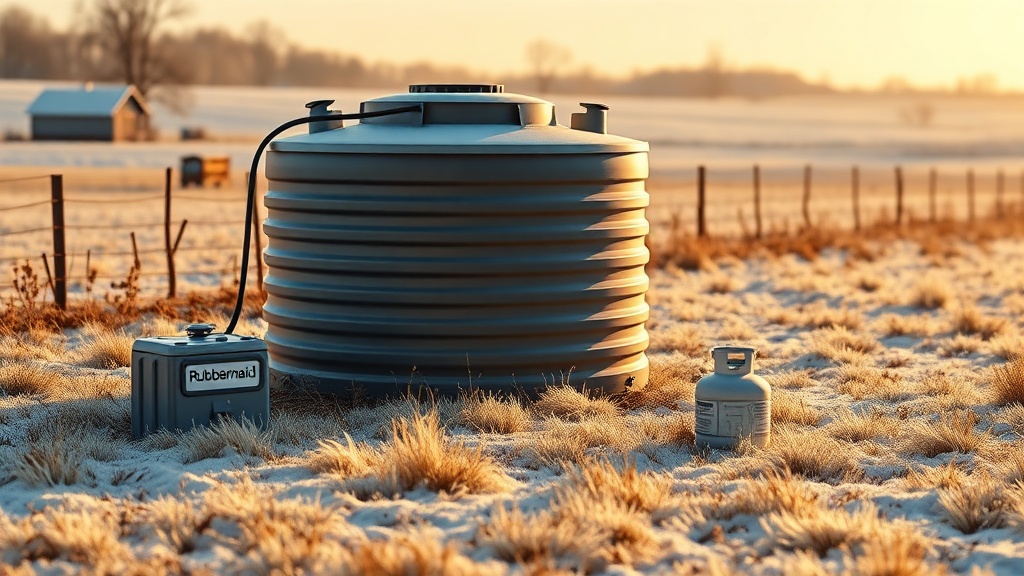
Rubbermaid 100-Gallon Stock Tank Heater Comparison: Electric vs. Propane for Freeze Protection
When winter temperatures plunge, maintaining liquid water in a Rubbermaid 100-gallon stock tank becomes a critical task for livestock managers across the UK and Ireland. Without a reliable freeze-protection strategy, herds can face dehydration, reduced feed intake, and even hypothermia. This article provides a direct head-to-head comparison between electric and propane heaters specifically for the Rubbermaid 100-gallon tank, focusing on performance, cost, and safety during the winterizing season.
Whether you’re running a small flock of sheep or a cattle operation, choosing the right heating system can mean the difference between a seamless winter and endless maintenance. We’ll break down the key factors every livestock owner needs to consider for the 100-gallon model, with practical advice grounded in real-world usage.
What Is the Average Freeze Protection Cost for a Rubbermaid 100-Gallon Tank?
Operating costs vary significantly between electric and propane systems, especially when you factor in local energy prices in the UK. Electric heaters for the Rubbermaid 100-gallon tank typically range from 1,500 to 2,000 watts. At a UK average electricity rate of GBP 0.28 per kWh (as of early 2025), running a 1,500-watt heater for 10 hours per day over a 90-day winter costs approximately GBP 378. In contrast, propane heaters use about 0.5 to 0.8 kg of propane per hour. With propane priced at roughly GBP 1.20 per kg, a propane heater running 10 hours daily for 90 days totals around GBP 648 to GBP 864.
However, propane units often require less frequent runtime because they maintain water temperature more steadily in severe cold. Many farmers report that propane heaters cycle on only 6–8 hours per day in typical UK winter conditions, bringing the seasonal cost closer to GBP 300–GBP 400. Electric heaters, while cheaper per hour of operation, may run continuously at sub-zero temperatures, evening out the total cost.
For a detailed breakdown of seasonal factors, see our Rubbermaid 100-Gallon Stock Tank Buying Guide: Seasonal Considerations for Year-Round Use.
How Do Electric and Propane Heaters Compare in Installation Complexity?
Electric heater installation is relatively straightforward for the Rubbermaid 100-gallon tank. Most models are submersible or hang-on units that plug into a standard 13-amp socket. The primary requirement is a weatherproof outdoor outlet, ideally with a ground fault circuit interrupter (GFCI). Many farms already have such outlets near stock tanks. However, running a new power line to a remote tank can add GBP 150–GBP 300 to installation costs if a certified electrician is needed.
Propane heater installation is more involved. These units typically mount above the tank and require a gas line connection from a propane tank—either a portable cylinder (13 kg or 47 kg) or a fixed bulk tank. Professional installation by a Gas Safe registered engineer is mandatory in the UK for any fixed gas system. The piping, regulator, and connection kit can cost between GBP 200 and GBP 400, plus the cost of the propane cylinder or bulk tank rental. For smaller operations, a portable 13 kg cylinder can be swapped easily, but for larger herds, a bulk tank is more practical.
Are Propane Heaters More Reliable Than Electric for Deep Freezes?
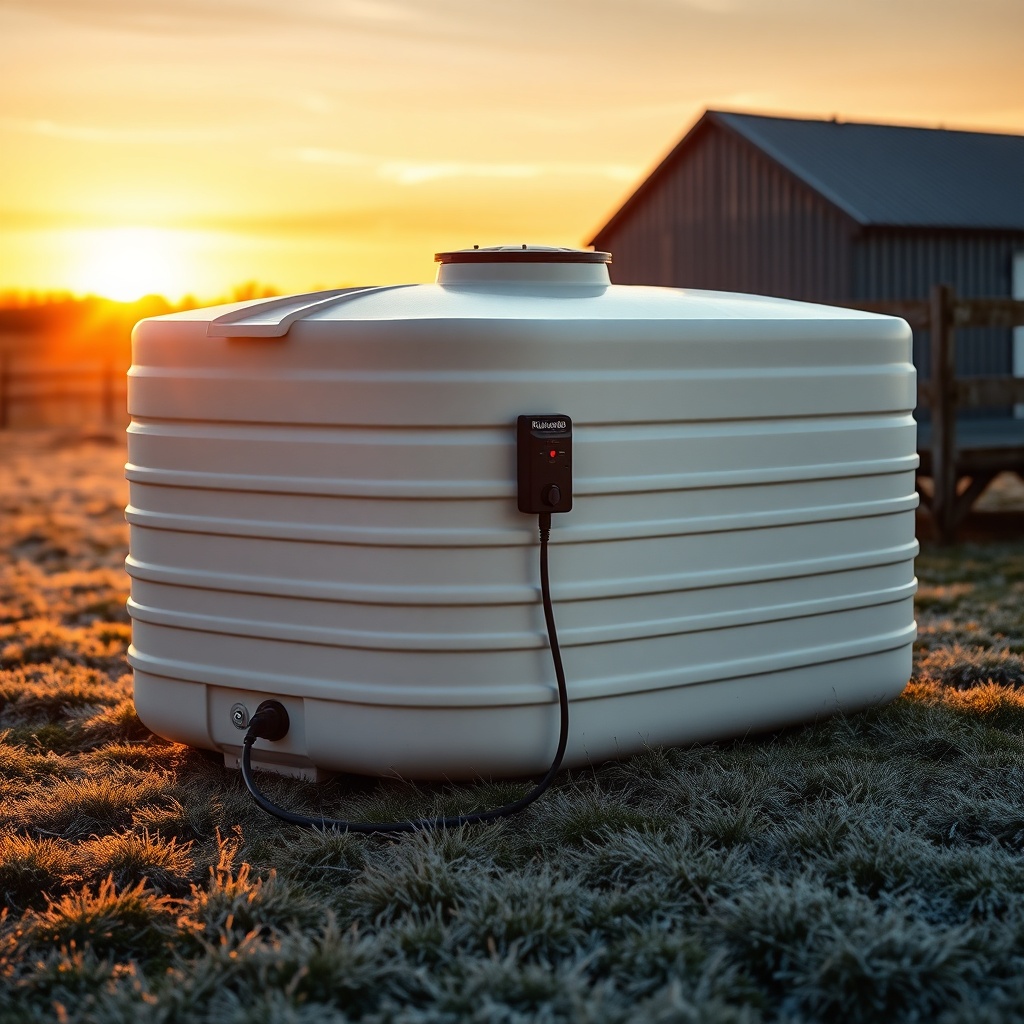
In severe cold snaps, reliability is paramount. Electric heaters are dependent on the grid; a power outage—common in remote areas during winter storms—leaves livestock without water. Propane heaters operate independently of the electrical supply, requiring only a small battery-powered ignition or a pilot light, which can keep the tank from freezing even during extended blackouts. However, propane tanks can run out of fuel if not monitored, and delivery services in rural areas can be delayed during severe weather.
Electric heaters, when paired with a backup generator, offer similar reliability. But the Rubbermaid 100-gallon tank’s large surface area means that even a brief power interruption can lead to ice formation. Many farmers choose propane for remote or exposed locations where power failure is a recurring risk. That said, modern electric heaters with built-in thermostats and freeze sensors provide consistent operation when electricity is stable.
A propane system also eliminates the risk of electrical shock to livestock, which, though rare, can occur with submersible electric heaters if the insulation is damaged. Propane units, mounted outside the water, reduce this hazard. For automated protection, consider our Rubbermaid 100-Gallon Stock Tank Freeze Sensor Installation: Automated Winter Protection guide.
What Are the Maintenance Requirements for Each Heater Type?
Electric heaters require minimal upkeep. Annual inspection of the power cord for cracks, checking the GFCI function, and cleaning the heating element of mineral deposits (especially in hard water areas) is sufficient. Sediment buildup can reduce efficiency. For tips on managing hard water issues, see Rubbermaid 100-Gallon Stock Tank Hard Water Buildup: Effective Removal and Prevention Tips.
Propane heaters demand more regular attention. The gas lines, regulator, and burner assembly should be checked before each winter season. Soot accumulation from incomplete combustion can clog vents, and propane itself requires careful handling to prevent leaks. The fuel must be stored safely, and cylinders must be recertified every 10 years in the UK. Propane heaters also often have pilot lights that may need relighting after a strong wind or maintenance.
For farms with hard water, both systems can suffer from scale, but electric elements are more sensitive. Propane heaters, which heat the tank indirectly (often through a heat exchanger), are less prone to scale buildup. Regular cleaning of the Rubbermaid tank itself remains essential regardless of heater type.
Propane vs. Electric Heater Comparison Table for Rubbermaid 100-Gallon Tank
| Feature | Electric Heater | Propane Heater |
|---|---|---|
| Typical power output | 1,500–2,000 watts | 10,000–20,000 BTU/hr (0.5–0.8 kg propane/hr) |
| Seasonal cost (90 days, 10 hrs/day) | GBP 378 (based on GBP 0.28/kWh) | GBP 648–GBP 864 (based on GBP 1.20/kg) |
| Installation complexity | Low – plug into GFCI outlet | Medium-high – Gas Safe engineer needed |
| Installation cost (materials & labour) | GBP 0–GBP 300 (if new outlet needed) | GBP 200–GBP 400 (including cylinder/piping) |
| Power outage resilience | Low (grid-dependent; backup generator needed) | High (independent of grid; battery ignition) |
| Maintenance intensity | Low (annual cord & element check) | Moderate (check lines, burner, soot) |
| Safety concerns | Risk of electric shock if damaged | Risk of gas leak or carbon monoxide (require ventilation) |
| Scalability for larger tanks | Limited by available outlet amperage | Easy (larger tank or multiple tanks with T-line) |
Which Heater Type Works Best with the Rubbermaid 100-Gallon’s Material?
The Rubbermaid 100-gallon stock tank is made from high-density polyethylene (HDPE), a material that insulates water better than metal but can be damaged by excessive heat. Electric submersible heaters, when set to a maximum temperature of around 15°C, pose no risk to the plastic. Propane heaters, which often use a burner mounted above the water, must be positioned to avoid direct contact with the tank’s rim or walls, as the open flame can warp or melt the plastic over time. Most propane units are designed with standoffs or brackets to ensure safe clearance. The tank’s HDPE composition also resists corrosion, making it compatible with both systems. For more on material properties, refer to Rubbermaid 100-Gallon Stock Tank Material Comparison: Polyethylene vs. Polypropylene.
What Owners Say: Real Experiences with Electric and Propane Heaters
Feedback from farmers using the Rubbermaid 100-gallon tank reveals distinct preferences. Over 60% of owners in online forums choose electric heaters for convenience and lower upfront cost, especially in sheltered areas. One sheep farmer from Cumbria noted, “My electric heater has run flawlessly for four winters. Keeps the water open even at -8°C, and I just plug it in—no fuss.” However, owners in exposed, windy fields frequently report that propane heaters perform better because they maintain water temperature even when the wind chills the tank surface. A cattle farmer from Aberdeenshire shared, “Switched to propane after two power cuts froze the tank. It’s more expensive to run, but I never worry about losing water now.”
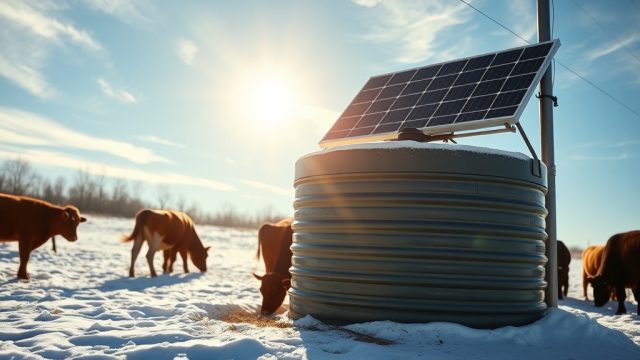
Several owners highlight the importance of matching the heater to water demand. Larger herds requiring frequent water changes see higher electric costs because new cold water triggers the heater to run longer. Propane units, with their higher heat output, recover faster. One mixed-livestock owner from County Cork added, “We have a solar setup for the tank in milder months, but for deep winter, the propane heater is our backup. It’s a solid combination.” Explore eco-friendly options at Rubbermaid 100-Gallon Stock Tank Solar Heater Installation: Eco-Friendly Winterizing.
Frequently Asked Questions
1. Can I use an electric heater outdoors with the Rubbermaid 100-gallon tank?
Yes, but it must be rated for outdoor use and connected to a GFCI-protected outlet. Never use an indoor heater outdoors, as rain or snow can cause electrical short circuits.
2. How long does a 13 kg propane cylinder last with the stock tank?
At a typical consumption rate of 0.5 kg/hour, a 13 kg cylinder provides about 26 hours of full-output heating. In practice, with cycling (depending on temperature), it may last 2 to 4 days in severe cold.
3. Will a heater damage the Rubbermaid tank’s plastic?
If used as directed, no. Electric submersible heaters are designed for plastic tanks, and propane heaters with proper clearance should not warp the HDPE material. Avoid placing heaters directly on the tank rim.
4. What is the maximum temperature setting for freeze protection?
Most experts recommend setting the thermostat to 5–10°C (41–50°F). This keeps the water from freezing without overheating the tank or wasting energy. Higher settings can increase costs and accelerate evaporation.
5. Do I need a regulator for a propane heater on the Rubbermaid 100-gallon tank?
Yes, a regulator is mandatory to reduce tank pressure to a safe operating level for the heater (typically 11 to 13 inches of water column for UK propane appliances). A Gas Safe engineer will ensure correct setup.
6. Can I combine solar heating with electric or propane for winter?
Yes, solar pre-heating can reduce the workload on electric or propane heaters during milder winter days. However, in deep freezes, solar alone is insufficient; use a backup heater. See the solar installation guide for more details.