How Does the Tuff Stuff 200-Gallon Stock Tank Size Compare to Smaller Models?
Choosing the right stock tank for your livestock operation is a decision that hinges on water volume, herd size, and space management. The Tuff Stuff 200-Gallon Stock Tank occupies a specific niche in the market, positioned between compact daily-use tanks and massive semi-trailer units. Understanding how its dimensions, capacity, and footprint stack up against smaller models like the 50-gallon, 100-gallon, and 150-gallon variations is essential for making a cost-effective purchase. This guide provides a detailed size comparison to help you gauge whether the 200-gallon model is the right fit for your herd, pasture, or barn setup.
What Are the Exact Dimensions of the Tuff Stuff 200-Gallon Stock Tank?
The Tuff Stuff 200-Gallon Stock Tank measures approximately 72 inches in length, 36 inches in width, and 28 inches in height. These dimensions translate to a rectangular footprint that fits comfortably in most standard livestock pens or corner setups. In comparison, the Tuff Stuff 100-gallon model typically measures around 48 inches long by 30 inches wide and 24 inches tall. The 150-gallon variant stretches to about 60 inches in length with a similar width and depth, while the 50-gallon tank is a compact 36 inches by 24 inches and 20 inches tall. The increased length of the 200-gallon tank allows for multiple animals to drink simultaneously without crowding, which is a significant advantage for larger herds.
When measuring the tank for placement, keep in mind the need for at least 12 inches of clearance on all sides for cleaning, siphon drain setup (Tuff Stuff 200-Gallon Stock Tank Siphon Drain Setup: Effortless Water Changes), and winter insulation. The 200-gallon tank’s larger surface area also means more exposure to sunlight and evaporation in summer, so consider positioning it under shade or installing a float valve for automatic refill.
How Does the Water Volume Compare Across Tuff Stuff Stock Tank Sizes?
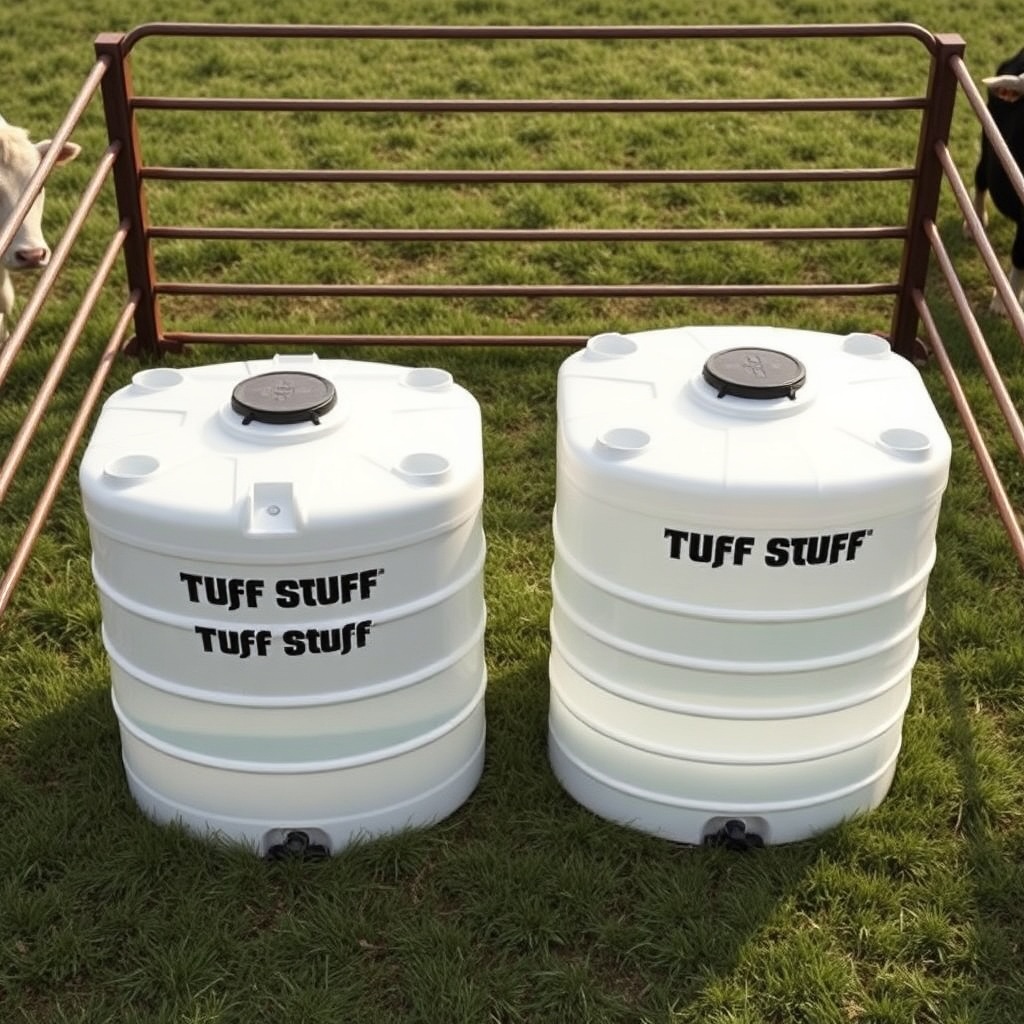
Water volume directly correlates to how many head of cattle, horses, or sheep a tank can serve per day. Below is a comparative table outlining the key specifications for the Tuff Stuff 50-gallon, 100-gallon, 150-gallon, and 200-gallon models:
| Tank Model | Capacity (Gallons) | Dimensions (L x W x H) | Approx. Weight Empty (lbs) | Suggested Daily Use (Adult Cattle) |
|---|---|---|---|---|
| Tuff Stuff 50-Gallon | 50 | 36″ x 24″ x 20″ | 22 | 2-3 head |
| Tuff Stuff 100-Gallon | 100 | 48″ x 30″ x 24″ | 38 | 5-7 head |
| Tuff Stuff 150-Gallon | 150 | 60″ x 32″ x 26″ | 55 | 8-12 head |
| Tuff Stuff 200-Gallon | 200 | 72″ x 36″ x 28″ | 70 | 12-16 head |
The 200-gallon model offers 33% more capacity than the 150-gallon tank, which is critical for operations with 12 or more adult cattle, especially during hot summer months when water consumption can double. For smaller herds of 5-7 animals, the 100-gallon tank is often sufficient and easier to handle, but the 200-gallon version provides a buffer during heat waves or if you plan to expand. Water quality testing (Tuff Stuff 200-Gallon Stock Tank Water Quality Testing: How to Ensure Safe Drinking Water for Livestock) is recommended regardless of tank size to prevent algae or bacterial growth.
What Are the Weight and Portability Differences Between These Sizes?
Empty weight is a key consideration for installation and seasonal movement. The Tuff Stuff 200-gallon tank weighs approximately 70 pounds when empty, which is manageable for two adults to carry or slide into position. In comparison, the 100-gallon tank weighs about 38 pounds, and the 150-gallon version weighs around 55 pounds. The 50-gallon tank is a lightweight 22 pounds, making it ideal for temporary pens or rotational grazing systems.
However, when filled with water, the 200-gallon tank holds roughly 1,670 pounds of water (8.34 lbs per gallon), bringing the total weight to over 1,700 pounds. This means the tank must be placed on a level, firm surface such as compacted gravel, concrete, or reinforced ground. Smaller tanks like the 100-gallon version handle around 835 pounds of water weight, making them slightly more forgiving on softer terrain. If you move tanks frequently between pastures, the 50- or 100-gallon models may be more practical, but the 200-gallon model offers significant labor savings in refilling frequency. See the heavy-duty construction details in the Tuff Stuff 200-Gallon Stock Tank Heavy-Duty Features: What Makes It Durable guide to understand how the tank withstands this weight load over time.
How Does the 200-Gallon Tank’s Footprint Affect Pasture and Barn Layout?
The 200-gallon tank requires a footprint of about 18 square feet (72 inches by 36 inches). For context, the 100-gallon model occupies roughly 10 square feet, and the 50-gallon version uses only 6 square feet. In a barn or loafing shed with limited space, the larger tank may restrict access to other areas or require repositioning of gates. Conversely, in an open pasture with 20 or more animals, the larger footprint actually promotes better traffic flow because multiple animals can drink side by side, reducing aggression and competition.
Consider the proximity to your water source and a reliable siphon drain setup (Tuff Stuff 200-Gallon Stock Tank Siphon Drain Setup: Effortless Water Changes) to facilitate cleaning. The 200-gallon tank’s size also accommodates a larger heater for winter use, which is covered in the How to Protect Your Tuff Stuff 200-Gallon Stock Tank from Freezing guide. If your barn doors are standard 36 inches wide, note that the tank’s 36-inch width fits through most openings, but the 72-inch length may require turning diagonally.
Does a Larger Tank Save Money on Water Separators, Heaters, and Maintenance?
While the initial cost of the Tuff Stuff 200-gallon tank is higher—typically ranging from £250 to £320 in the UK market or approximately $300 to $400 in the US—the per-gallon cost is lower than smaller sizes. The 100-gallon tank often costs between £140 and £180, while the 50-gallon model runs about £80 to £110. Over the long term, the 200-gallon tank reduces the frequency of heater installation (Tuff Stuff 200-Gallon Stock Tank Winterizing: Heater Installation Guide) because the larger water volume retains heat better than smaller tanks. However, you will need a more powerful heater—typically 1500 to 2000 watts—compared to a 100-gallon tank that works well with a 1000-watt heater.
Maintenance costs scale differently: cleaning a 200-gallon tank requires more time and water, but you clean it less often because the larger volume dilutes contaminants. Water separators and float valves are similarly priced across sizes, but the 200-gallon tank may require a heavier-duty float mechanism to handle the higher refill flow rate. If you are considering a purchase, check the Tuff Stuff 200-Gallon Stock Tank Buying Guide: What to Consider Before Purchase for detailed cost-breakdown comparisons.
What Owners Say About the Tuff Stuff 200-Gallon vs. Smaller Models
Livestock owners who have used multiple Tuff Stuff tank sizes consistently note that the 200-gallon model is the “sweet spot” for herds of 10–15 cattle. One beef farmer from Yorkshire reported that upgrading from a 100-gallon tank to the 200-gallon model reduced his daily refill trips from twice a day to once every two days during summer. Another owner with a small dairy operation found the 150-gallon tank sufficient for 8 cows, but after adding two more heifers, the 200-gallon version was necessary to avoid midday water shortages.
Criticism typically centers on the tank’s weight when full, with one user mentioning they needed to build a reinforced concrete pad to prevent sinking. The larger size also makes it less ideal for horses that might paw or tip smaller tanks, as the 200-gallon’s heft resists movement. Overall, owners appreciate the tank’s consistent water temperature stability and reduced algae problems compared to the 50-gallon model, which heats up quickly in direct sun. For those using float valves, the 200-gallon tank’s larger volume provides a steadier water level, reducing valve wear and tear.
Frequently Asked Questions
How many cattle can the Tuff Stuff 200-gallon tank support?
It comfortably supports 12–16 adult cattle under normal conditions. In hot weather, when water consumption can exceed 20 gallons per head per day, it may still suffice for a herd of 12 if the tank is refilled daily or fitted with a float valve.
Can I use the Tuff Stuff 200-gallon tank for horses?
Yes, but some horse owners prefer smaller tanks because horses are more likely to contaminate water with hay or debris. The 200-gallon tank’s large surface area can make debris removal more challenging, but its weight prevents tipping, which is a safety advantage.
Is the Tuff Stuff 200-gallon tank compatible with a siphon drain?
Absolutely. The tank’s flat bottom and smooth interior make it ideal for the Tuff Stuff 200-Gallon Stock Tank Siphon Drain Setup, which allows for effortless water changes without flipping the tank.
Does the 200-gallon tank require a special heater?
Yes, a 1500–2000 watt submersible or floating heater is recommended for winter use. The Tuff Stuff 200-Gallon Stock Tank Winterizing: Heater Installation Guide provides specific recommendations for maintaining ice-free water.
How often should I clean a Tuff Stuff 200-gallon tank?
Every 2–4 weeks, depending on algae growth, weather, and animal debris. Regular Tuff Stuff 200-Gallon Stock Tank Water Quality Testing helps determine the optimal cleaning schedule for your specific environment.
What is the expected lifespan of a Tuff Stuff 200-gallon stock tank?
With proper care and winter protection, the tank can last 10–15 years. UV degradation is minimal due to the high-density polyethylene construction, but regular freeze protection (How to Protect Your Tuff Stuff 200-Gallon Stock Tank from Freezing) extends its life significantly.