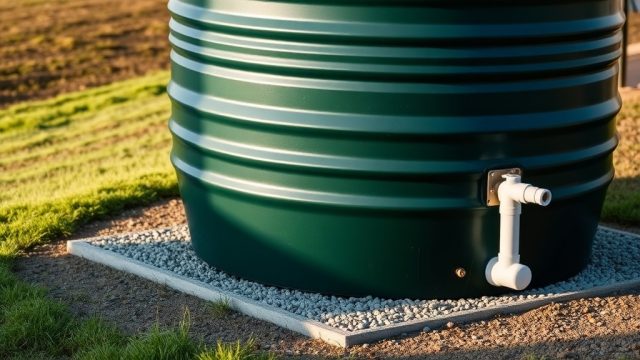

Moving Your Rubbermaid 100-Gallon Stock Tank: Portability Options and Tips
Relocating a fully filled 100-gallon stock tank is a logistical challenge, but with the right portability strategies, you can reposition it for better drainage, sun exposure, or pasture access. This article provides practical advice on moving the Rubbermaid 100-Gallon Stock Tank, covering empty and partially filled scenarios.
Understanding the tank’s weight—approximately 35 to 40 pounds empty and over 830 pounds when full—is key to safe handling. Whether you’re a hobby farmer or a livestock manager, these tips will help you avoid strain and equipment damage.
How Much Does the Rubbermaid 100-Gallon Stock Tank Weigh Empty and Full?
The empty weight of the Rubbermaid 100-Gallon Stock Tank is roughly 37.5 pounds (17 kg) for the standard polyethylene model. When filled with water to capacity (100 gallons), the total weight jumps to approximately 835 pounds (380 kg) due to water density (8.33 pounds per gallon). This dramatic difference makes portability a two-phase operation: moving an empty tank is a one-person job, but moving a full tank requires mechanical assistance or draining.
| Condition | Approximate Weight | Portability Method |
|---|---|---|
| Empty (dry) | 37.5 lbs (17 kg) | One person can lift and carry |
| Full (water only) | 835 lbs (380 kg) | Requires dolly, pallet jack, or draining |
| Filled with livestock | 835+ lbs + animal weight | Must drain and remove animals first |
For Rubbermaid 100-Gallon Stock Tank Material Review: Polyethylene vs. Steel, the lightweight polyethylene construction aids initial handling but demands careful lifting to avoid cracks.
What Is the Best Way to Drain the Tank Before Moving?
Draining is essential for safe transport. The Rubbermaid 100-Gallon Stock Tank has a threaded drain plug at the bottom, which can be removed with a wrench. Position the tank near a downhill slope or gravel area to allow gravity drainage. Alternatively, use a siphon hose (½-inch diameter) inserted into the water outlet. For large-scale moves, a submersible pump (e.g., 1/3 HP) will empty the tank in about 10 to 15 minutes. Always drain completely to prevent sloshing during transport.
Important: Do not tilt the tank while partially filled—water shifts quickly and can cause tipping. Drain to below 10% capacity for safe lifting.
Which Tools Are Required to Move a Full Rubbermaid 100-Gallon Stock Tank?
Moving a full tank without draining is impractical, but for partial relocations (e.g., shifting by a few feet), consider these tools:
- Heavy-duty dolly or appliance dolly with strap (capacity 1,000+ lbs)
- Pallet jack (if tank is on a solid, level surface)
- Furniture sliders (homemade from plywood with smooth laminate)
- Ratchet straps for secure attachment to dolly
- Old carpet or plywood to distribute weight on soft ground
For Rubbermaid 100-Gallon Stock Tank Algae Control: Effective Prevention and Treatment Methods, draining also removes algae residue, simplifying cleaning before the move.
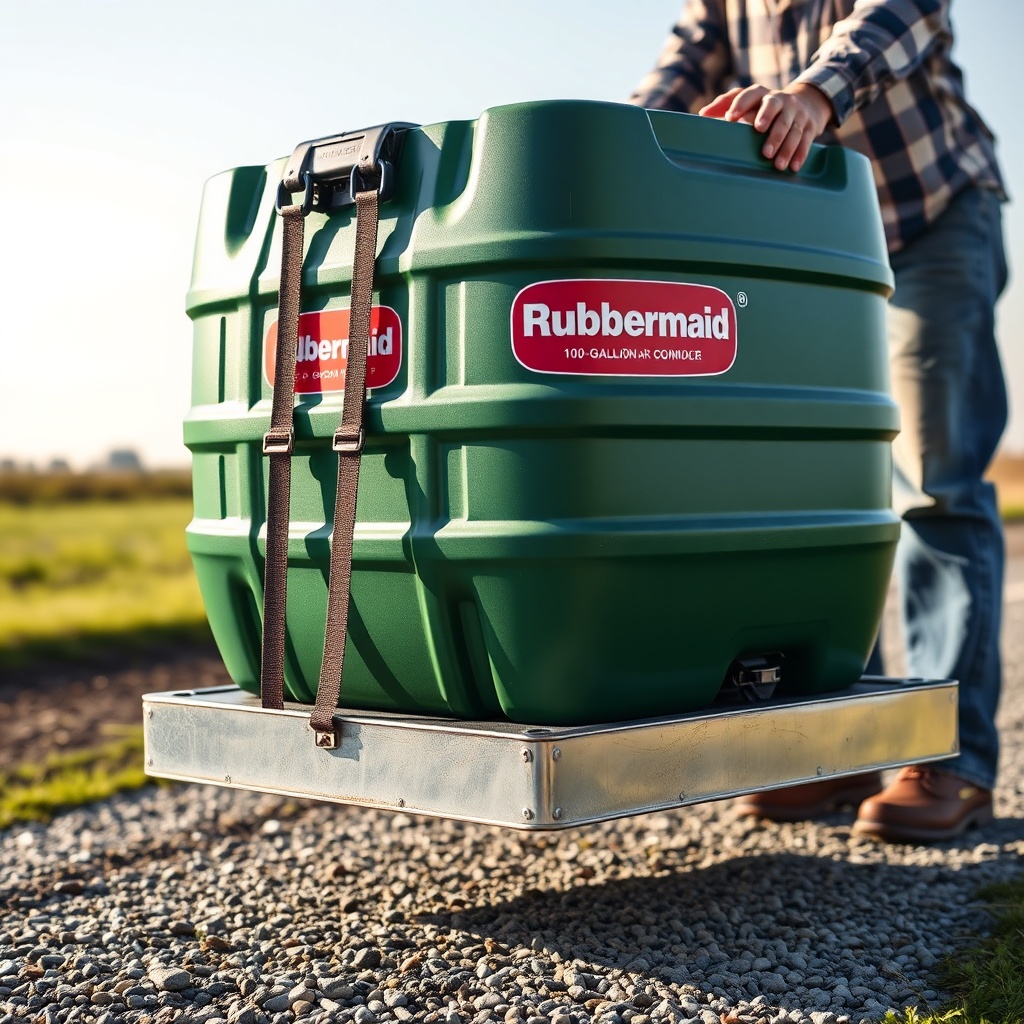
Can One Person Move This Tank Alone?
Yes, when the tank is completely empty. The 37.5-pound dry weight is manageable for most adults. Lift with your legs, keep your back straight, and carry the tank from the bottom rim—avoid gripping the side walls alone as they are flexible. For distances over 50 feet, use a hand truck. However, a full tank requires two people or equipment. Never attempt to drag a full tank across gravel or concrete as the drain plug and bottom ridge will abrade.
Alternative method: Inflate a camp mattress or air cushion underneath the tank and slide it across smooth concrete (friction reduction). This works well for garage or barn floors.
What Are the Best Practices for Transporting the Tank on a Trailer or Truck Bed?
For moving the tank long distances (e.g., between properties), secure transport is critical to avoid cracking the polyethylene shell. Follow these tips:
- Empty the tank fully and drain all water lines; residual water can freeze during winter transport.
- Wrap the tank in moving blankets or heavy-duty plastic sheeting to prevent scratches from cargo hooks.
- Place the tank upright in the truck bed; if lying flat, ensure it’s wedged with foam blocks so it doesn’t roll.
- Use ratchet straps over the top rim—avoid pressing on the sidewalls as they can buckle.
- Secure drain plug with tape or remove it to prevent it from unscrewing during bumps.
Never stack other items on top of the tank, as the lid (if present) is not structural. For Rubbermaid 100-Gallon vs. Tuff Stuff 200-Gallon Stock Tank: Which Is Right for You?, the lighter weight of the 100-gallon model makes it easier for single-person loading compared to larger counterparts.
How Do I Reinforce the Tank for Frequent Moving?
If you plan to relocate the tank seasonally (e.g., for rotational grazing), consider these reinforcements:
- Install a steel or plastic base plate (¾-inch thick plywood) cut to the tank’s footprint—drill holes for drain access.
- Add a drain valve extension (with a ball valve) so you don’t need to unscrew the plug each time.
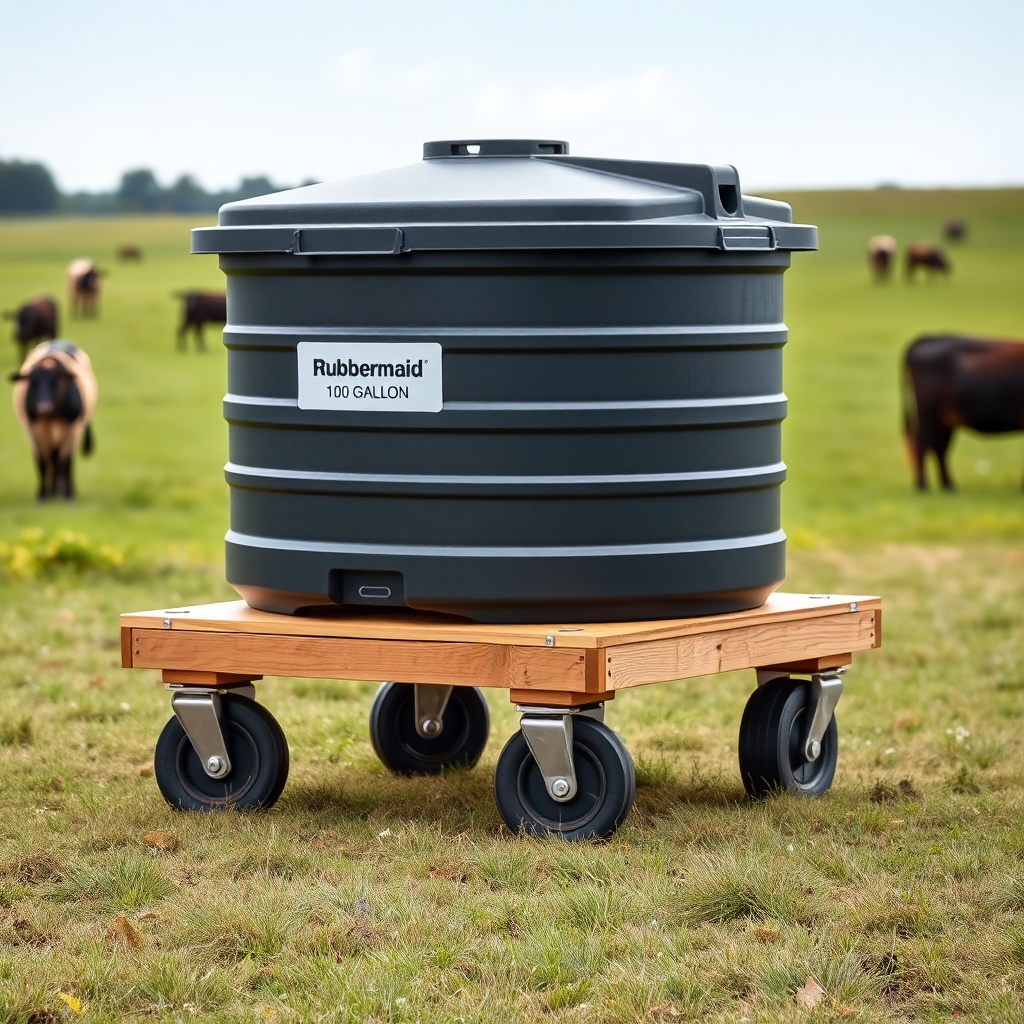
- Use casters or wheels (four swivel casters rated at 300 lbs each) bolted to a wooden frame that holds the tank’s bottom.
- Apply UV-protective coating to the exterior to avoid sun damage if moving between open pastures.
Note: The standard Rubbermaid model does not come with permanent wheel mounts; you will need to build or purchase a rolling platform. This upgrade costs about $60 to $100 USD for materials.
What Owners Say About Moving This Tank
Livestock owners on farm forums report that the Rubbermaid 100-Gallon Stock Tank is “surprisingly light when empty” but “a beast when full.” Common praise includes the ease of sliding it on concrete when dry—one owner noted, “I can drag it with one hand across my barn floor.” Negative feedback centers on the lack of built-in handles. “You have to hold it from underneath, which is awkward for long carries,” wrote a hobby farmer from Texas. Many owners recommend using a dolly if moving more than 100 feet.
For Rubbermaid 100-Gallon Stock Tank Repair Guide: Fixing Common Leaks and Cracks, owners caution against dropping the tank during transport, as cracks often form at the rim. Several users install a simple flat rope handle on the side using epoxy—a quick DIY solution.
Frequently Asked Questions
Can I move a Rubbermaid 100-Gallon Stock Tank with water still inside?
It’s not recommended because the weight exceeds safe manual lifting limits. Drain at least 90% of the water before attempting to shift the tank. Partial water sloshing can cause imbalance.
What is the maximum distance I can easily drag the tank empty?
On smooth concrete or packed dirt, you can drag an empty tank up to 200 feet without excessive effort. On gravel or rough terrain, limit to 50 feet to avoid bottom abrasion. Use a tarp underneath for sliding.
Does the tank have a drain plug for quick draining?
Yes, the Rubbermaid 100-Gallon Stock Tank includes a threaded drain plug at the bottom center. It is removable with a 1-inch wrench. Some owners replace it with a brass ball valve for easier draining.
Can I use a forklift to move the full tank?
Yes, if the tank is on a rigid pallet. Place the tank on a 48×48-inch pressure-treated pallet rated for 1,000 lbs. Forklift tines can slide under the pallet. Never lift the tank directly with forklift tines, as this may crack the bottom.
What is the best way to move the tank up stairs or over thresholds?
For empty tank transport, tilt it onto its bottom edge and carry it like a large drum. For full tanks, drain completely and use a stair-climbing dolly. The tank’s rectangular shape (72″ x 32″ x 20″) may require tilting sideways on narrow staircases.
How much does it cost to pay a professional to move this tank?
Moving services for a 100-gallon stock tank range from $50 to $150 USD depending on distance and obstacles (e.g., stairs, fences). Always ask for a quote based on the tank’s empty weight (37.5 lbs) to avoid overcharges.