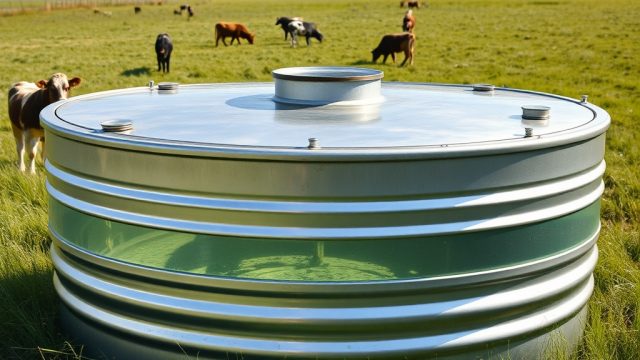
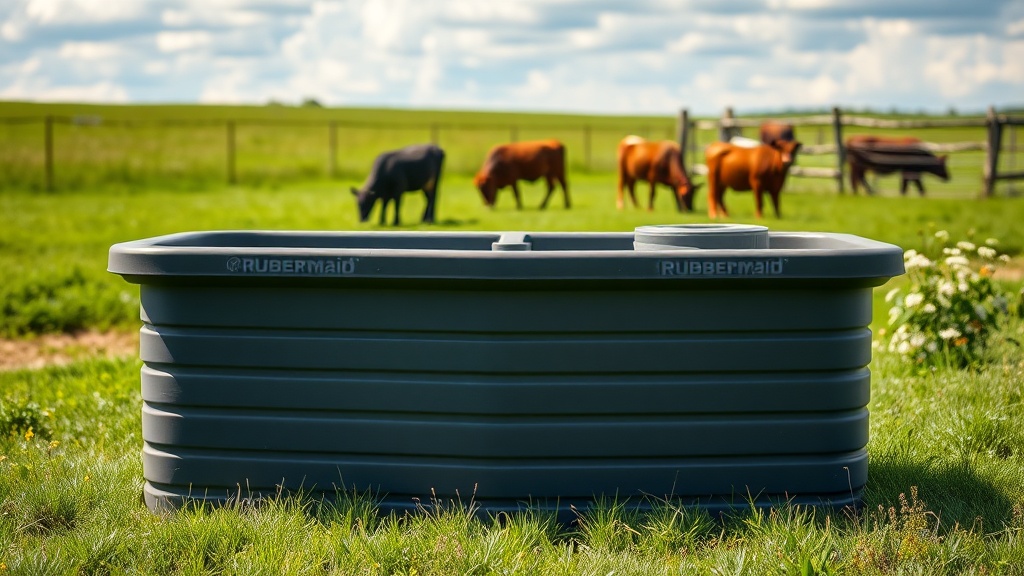
Why Is Water Quality Critical in a Rubbermaid 100-Gallon Stock Tank?
Maintaining clean, safe water in your Rubbermaid 100-Gallon Stock Tank is essential for livestock health and tank longevity. Stagnant water promotes algae blooms, bacteria growth, and mineral buildup, which can lead to digestive issues in cattle, horses, or sheep and reduce the tank’s service life. Proper water quality management also prevents costly repairs and frequent emptying, especially given the stock tank’s dense polyethylene construction that resists rust but can trap heat and accelerate algae formation.
This guide focuses on practical water quality strategies, from filtration to chemical treatments, specific to the Rubbermaid 100-Gallon Stock Tank model. For a deeper understanding of how the material itself influences maintenance, read our Rubbermaid 100-Gallon Stock Tank Material Review: Polyethylene vs. Steel.
How Does Algae Impact Water Quality in a Rubbermaid 100-Gallon Stock Tank?
Algae are the most common water quality issue in stock tanks, especially in warm months. In the Rubbermaid 100-Gallon Stock Tank, the dark-colored interior (typically gray or black) absorbs sunlight, raising water temperature and creating ideal conditions for green algae and blanket weed. Left unchecked, algae can:
- Deplete dissolved oxygen, stressing livestock and reducing consumption.
- Produce toxins in severe blooms, causing diarrhea or liver damage in young animals.
- Clog float valves, filters, and automatic waterers.
- Create slimy surfaces that trap debris and bacteria.
A water temperature above 25°C (77°F) significantly accelerates algae reproduction. The Rubbermaid tank’s 100-gallon volume holds heat longer than smaller tanks, making proactive control essential.
What Are the Best Filtration and Aeration Methods for This Tank?
Mechanical filtration and aeration are the backbone of clean water in the Rubbermaid 100-Gallon Stock Tank. While the tank does not come with built-in filtration, several aftermarket solutions work well.
Filtration Options
| Method | Cost (GBP) | Effectiveness | Maintenance Frequency |
|---|---|---|---|
| Submersible pump + cartridge filter | £45–£80 | High (removes particles >50 microns) | Every 2 weeks |
| Gravity-fed pre-filter (on inlet) | £15–£30 | Medium (stops large debris) | Weekly |
| DIY bucket filter with gravel/sand | £10–£25 | Low–Medium (limited flow) | Monthly |
| Solar-powered aeration diffuser | £60–£120 | High (prevents stagnation, reduces algae) | Seasonal cleaning |
Note: Prices are approximate and based on UK retailers as of 2025.
Aeration Benefits
Adding a small air pump or solar-powered diffuser at the bottom of the Rubbermaid tank increases oxygen exchange and disrupts algae spores’ ability to settle. This alone can reduce algae growth by 40–60% according to university extension trials.
For a comprehensive guide on fixing issues that arise from neglected water quality, see our Rubbermaid 100-Gallon Stock Tank Repair Guide: Fixing Common Leaks and Cracks.
Which Safe Chemical Treatments Work for Algae Control in a Rubbermaid 100-Gallon Stock Tank?
When filtration and aeration aren’t enough, chemical treatments offer a quick resolution for severe algae blooms. However, livestock safety is paramount—never use pool-grade algaecides.
Safe options for the Rubbermaid 100-Gallon Stock Tank include:
- Copper sulfate pentahydrate: 0.5–1.0 ppm (parts per million) is effective against green algae. Add 1–2 grams per 100 gallons initially; monitor for 24 hours.
- Barley straw extract: Liquid formulations added weekly (cost: £12–£20 per season) prevent algae spores from germinating without harming livestock.
- Hydrogen peroxide (3% food-grade): 250 ml per 100 gallons knocks back string algae quickly; decomposes into water and oxygen.
Warning: Always dilute chemicals in a bucket of water before adding to the tank to avoid concentrated areas. Test water after 48 hours if using copper sulfate, as some animals (especially sheep and goats) are sensitive to copper accumulation.
For a dedicated deep dive into algae prevention, refer to our separate article Rubbermaid 100-Gallon Stock Tank Algae Control: Effective Prevention and Treatment Methods.
How Often Should You Clean a Rubbermaid 100-Gallon Stock Tank?
Cleaning frequency depends on stocking density, climate, and whether you use additives. For the Rubbermaid 100-Gallon Stock Tank, follow this schedule:
- Summer (May–September): Complete drain, scrub, and refill every 7–10 days. Algae can form visible mats in 4 days at 30°C.
- Winter (October–April): Every 3–4 weeks, unless using a heater (which can accelerate organic growth in warmer water).
- With chemical additive: Extend intervals by 50% but check water clarity weekly.
Cleaning steps: empty tank using a sump pump or siphon, scrub interior with a stiff brush and mild dish soap (avoid bleach unless thoroughly rinsed), rinse three times, refill. Do not use pressure washers above 1,500 psi on the polyethylene surface to avoid micro-cracks.

What Owners Say About Water Quality in the Rubbermaid 100-Gallon Stock Tank
Farmers and smallholders across the UK have shared practical experiences with this tank’s water quality challenges. A common theme is that the smooth interior makes cleaning easier than steel or concrete tanks—muck does not adhere as stubbornly. However, many note that the tank’s shape (tapered sidewalls) can trap sediment in the bottom corners if not agitated.
One owner from Yorkshire reported that adding a single goldfish (a natural algae eater) kept the water crystal clear for three months, though this method requires a mesh cover to prevent predation. Another user in the Cotswolds prefers a solar air stone, saying it reduced cleaning from twice a week to once every ten days. Negative feedback primarily involves the tank’s black interior heating up too quickly in direct sunlight, prompting owners to paint the exterior with white livestock-safe paint or relocate to partial shade.
Overall, the consensus is that the Rubbermaid 100-Gallon Stock Tank excels in durability but requires a proactive water management routine—especially for algae control—to maintain safe drinking water for livestock.
Frequently Asked Questions
1. Can I use tap water directly in the Rubbermaid 100-Gallon Stock Tank?
Yes, tap water is safe. However, if your local supply contains high chlorine levels (common during summer), let it sit for 24 hours before allowing livestock to drink, or add a dechlorinating tablet.
2. How do I prevent algae without chemicals in this tank?
Shade is the best natural method—place the tank under a tree or a corrugated roof overhang. Aeration via a solar pump and adding barley straw extract also work without chemicals.
3. Is it safe to use bleach for cleaning the Rubbermaid 100-Gallon Stock Tank?
Food-grade hydrogen peroxide or white vinegar is safer than bleach. If you use chlorine bleach (sodium hypochlorite), dilute at a ratio of 1:20 (1 part bleach to 20 parts water) and rinse thoroughly until no odor remains.
4. How often should I replace the water in a 100-gallon stock tank?
With good filtration and no livestock crowding, replace 50% of the water weekly. Complete changes are needed every 2–3 weeks in warm weather, or as soon as water becomes cloudy or foul-smelling.
5. Can I use a pond UV clarifier on a stock tank?
Yes, but ensure the UV unit is sized for 100 gallons (typically 9–13 watt). Install it in a recirculating loop with a pump. UV light kills free-floating algae but not attached forms; it works best as a preventive measure.
6. What if my livestock refuse to drink from a treated water tank?
Some animals are sensitive to copper sulfate or barley straw scent. If refusal occurs, stop treatment, flush the tank twice, and return to filtered-only water. Introduce a flavor masker like apple cider vinegar (1 tablespoon per 5 gallons) to encourage drinking.